Engwe E26 vs L20 Boost: Which Fat Tyre Engwe Should You Buy?
Two fat tyre Engwe e-bikes go head to head. We compare wheel size, UK legality, real range, comfort, storage and current Biktron prices so you can buy with confidence.

The line-up compared
| Model | Price | Motor | Range | Top speed | UK road status |
|---|---|---|---|---|---|
| Engwe L20 Boost Fat Tire Electric Bike | £1,069.00 | 250W | 78 Miles | 15.5 Mph | Road legal |
| Engwe E26 Fat Tire Electric Bike | £1,189.00 | 250W | 87 Miles | 15.5 Mph | Road legal |
| Engwe L20 3.0 Boost Folding Electric Bike | £1,019.00 | 250W | 53 Miles | 15.5 Mph | Road legal |
| Engwe L20 3.0 Pro Foldable Electric Bike | £1,369.00 | 250W | 87 Miles | 15.5 Mph | Road legal |
Fat tyre electric bikes are brilliant for bumpy UK roads, canal paths and light trails. Engwe makes two popular models: the 26-inch E26 and the 20-inch L20 Boost. This guide compares them side by side.
We have not ridden these bikes, so this is based on published specs, UK law and current Biktron prices. The Engwe range offers a few fat tyre choices, but these two are the main all-rounders.
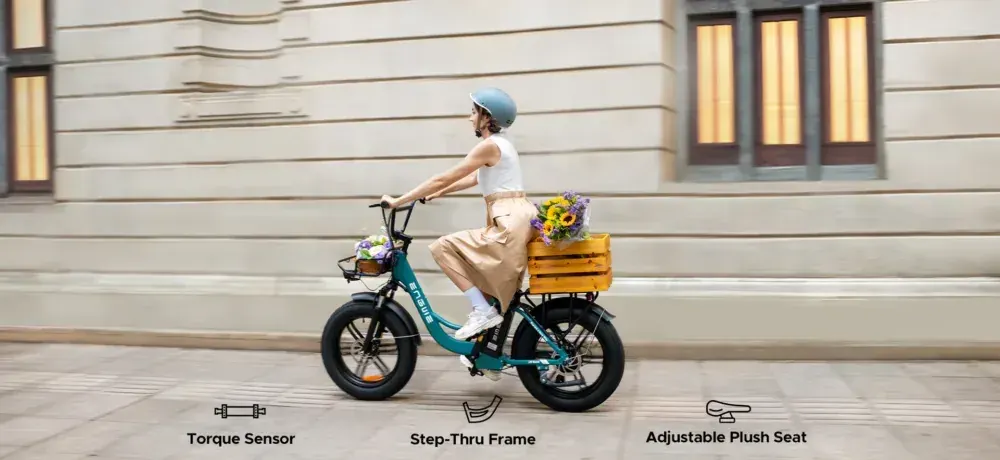
Engwe E26 vs L20 Boost at a glance
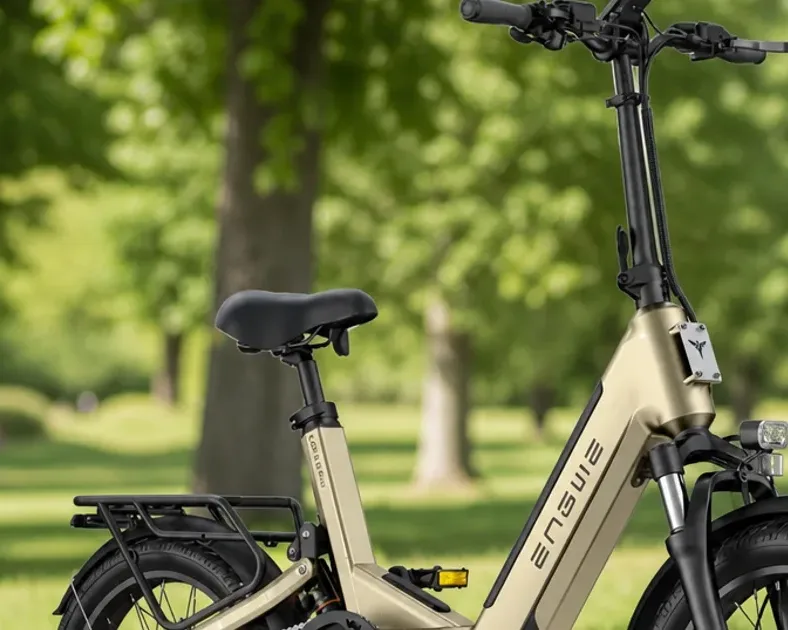
The Engwe E26 is a 26-inch fat tyre electric bike with a step-through frame. It costs £1189, down from £1279. It feels stable on rougher ground and suits taller riders.
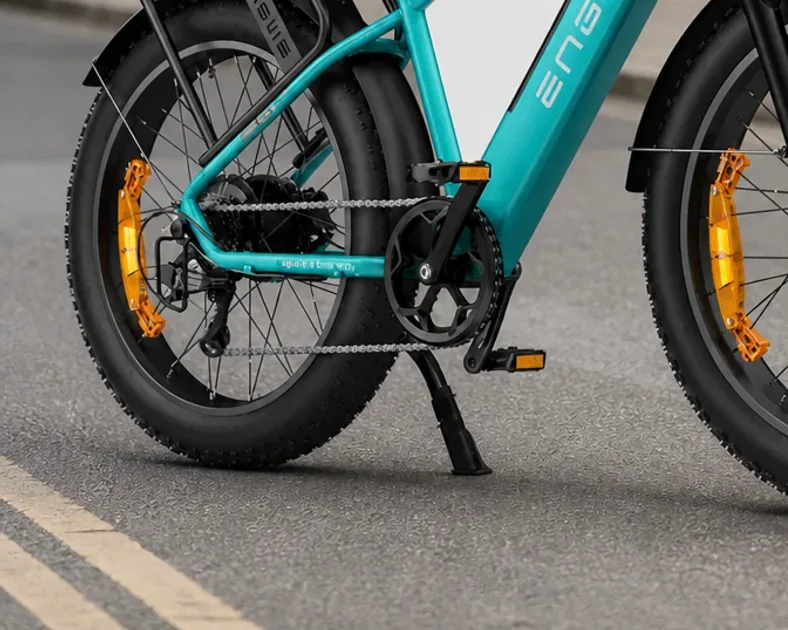
The Engwe L20 Boost has 20-inch fat tyres and a lower-slung frame. It costs £1069, only £30 below its RRP of £1099. Its smaller wheels make it nippier in town.
What the wheel size changes
A 26-inch wheel rolls over potholes and kerbs more easily than a 20-inch wheel. The E26 holds its line better on gravel and broken tarmac. It feels more like a traditional bike.
The L20 Boost turns faster and fits into tighter spaces. That helps in traffic, at busy bike racks or when you wheel it through a narrow hallway. The trade-off is a slightly busier ride at speed.
First impressions of build
Both bikes use chunky aluminium frames and wide handlebars. Engwe fits fat tyres as standard, so neither feels twitchy. The E26's larger frame often suits riders from about 5'6" upward.
The L20 Boost works well for shorter riders and those who want a lower standover height. If you are between sizes, the E26 is usually the safer choice for legroom.
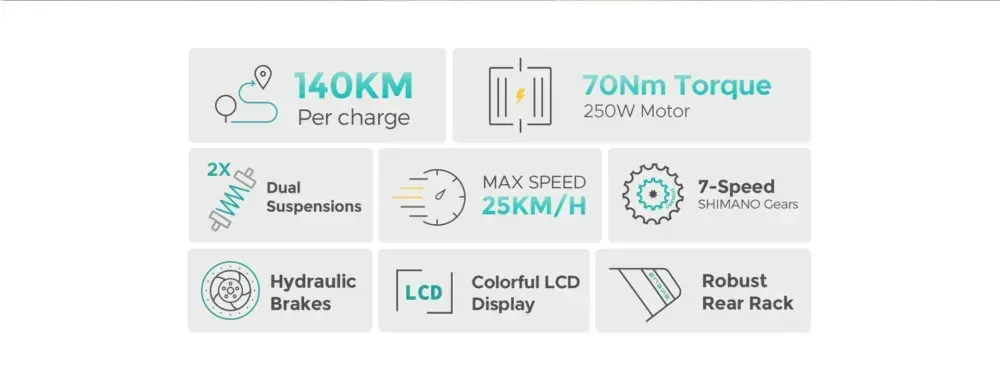
UK e-bike law and what it means for both
Both bikes are sold as UK legal electric bikes, also called EAPCs. That means the motor is rated at 250 watts and the electric assist stops at 15.5 mph. You must be 14 or older to ride one.
- 250W maximum motor rating
- 15.5 mph assisted speed limit
- Minimum rider age 14
- No licence, tax or registration needed
You do not need a licence, tax or registration, and you can ride on cycle paths. The full rules are on GOV.UK. Helmets are not a legal must, but they are strongly advised. For cycle safety advice, see RoSPA.
Throttle and pedalling rules
A twist-and-go throttle can only take you up to about 3.7 mph without pedalling. After that, the motor helps only while you pedal. This is the same for both Engwe models.
If you remove the speed limiter or fit a more powerful controller, the bike stops being a legal EAPC. You would then need insurance, a licence and a number plate. We never recommend that.
Where you can ride
You can ride both bikes on roads, cycle lanes and bridleways, but not on footpaths. Sustrans and Cycling UK have helpful guides on where e-bikes are allowed. Check local rules before heading onto shared paths.
Motor, battery and real-world range
Engwe fits a 250-watt rear hub motor to both models. The motor is quiet and gives smooth assistance from a standing start. It is not a high-torque mid-drive, so very steep hills need more effort from you.
Manufacturer range figures are best-case numbers. They are usually tested with a light rider, flat ground, warm weather and low assist. Real range drops in cold weather, on hills and if you carry panniers.
For honest e-bike range advice, Cycling UK explains how battery range varies. Expect around 60 to 70 percent of the quoted figure in typical UK conditions.
Battery removal and charging
Both bikes have a removable battery, which is handy for charging indoors. A full charge takes roughly four to six hours. You can top up after shorter rides without harming the cells.
Store the battery at room temperature in winter. Cold garages reduce range and can shorten battery life. The L20 Boost's smaller frame does not mean a smaller battery, but always check the live product page.
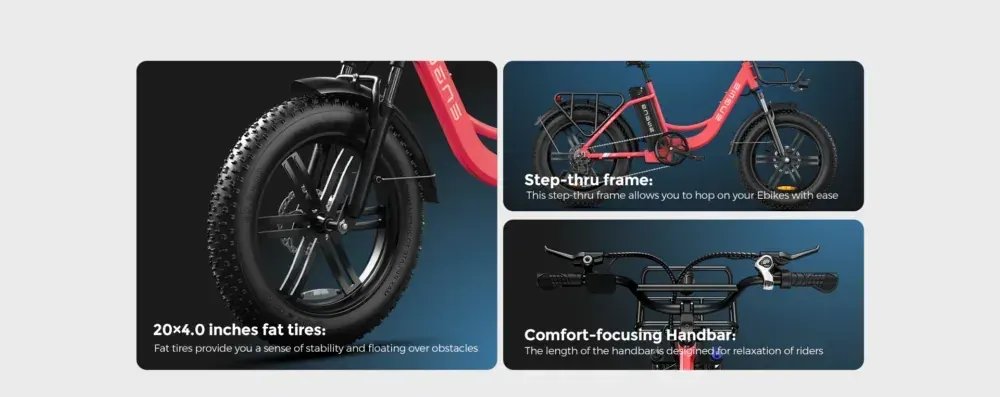
Ride comfort, tyres and suspension
Fat tyres are the headline feature here. They run at lower pressure than skinny road tyres, so they soak up small bumps and give extra grip. Neither bike has full suspension, so the tyres do a lot of the work.
- More grip on gravel and wet leaves
- Lower tyre pressure absorbs small bumps
- Stable feel at low speed
- Less chance of pinch flats
The E26's 26-inch wheels add another layer of comfort. Bigger wheels roll over rough edges more smoothly. The L20 Boost's 20-inch wheels are more responsive, but you will feel sharp potholes more.
Where fat tyres help most
Fat tyres shine on gravel tracks, towpaths, wet leaves and light mud. They are not a replacement for a full-suspension mountain bike, but they make everyday riding more forgiving. Both models handle canal paths well.
On smooth tarmac, fat tyres feel slower than thin tyres. The motor makes up for that. If most of your riding is on roads, you may want to inflate the tyres towards the higher end of the recommended range.
Saddle and handlebar position
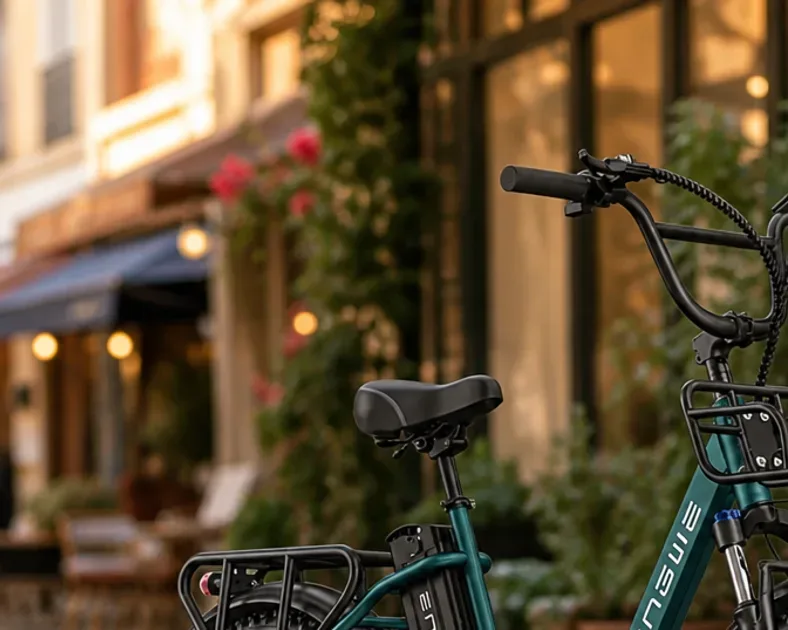
Both bikes use a swept-back handlebar and a padded saddle. You sit fairly upright, which helps you see traffic and keeps pressure off your wrists. The L20 Boost's lower frame is easier to mount.
The E26 gives more room to stretch your legs. Taller riders often prefer the E26 for this reason. Short riders may feel more in control on the L20 Boost.
Folding, carrying and storage
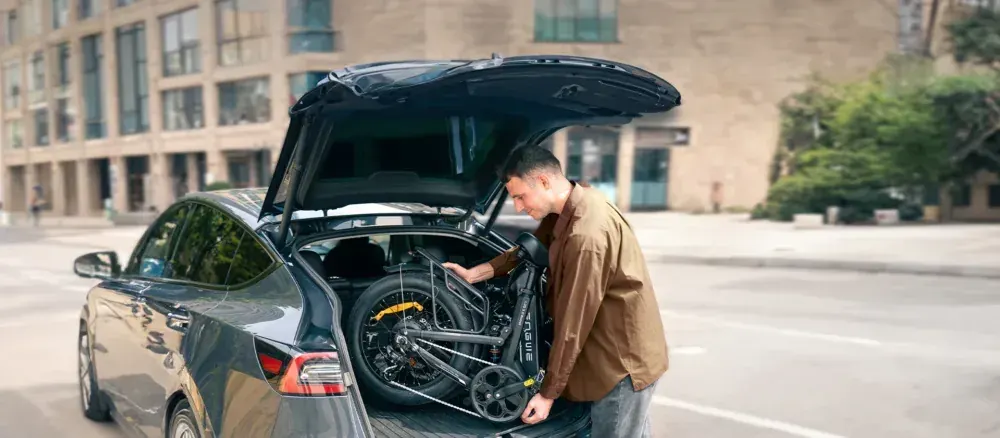
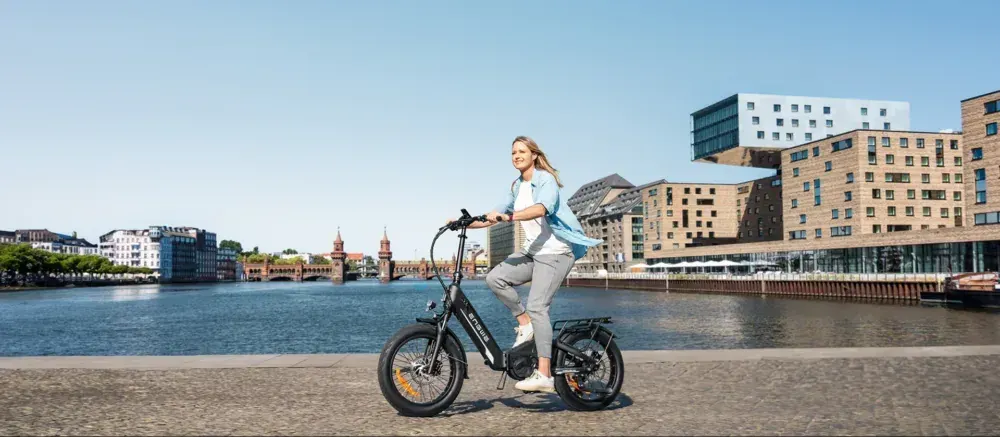
Neither of these two models is a folding bike. The E26 has a rigid 26-inch frame, and the L20 Boost is also a fixed frame. If you need to carry your e-bike on a train or store it in a small flat, check the folding bikes category.
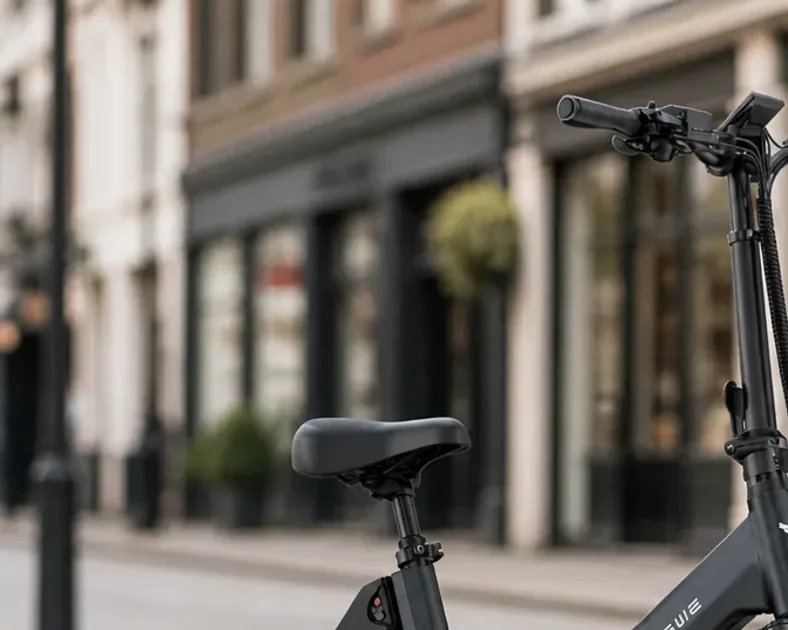
Engwe does make a folding version called the Engwe L20 3.0 Boost. It costs £1019 and folds down for the boot of a car. That is a better choice if space is tight.
Weight and lifting
Fat tyre e-bikes are heavy, often around 25 to 30 kg. Lifting either bike onto a car rack is a two-person job for many riders. The L20 Boost is slightly easier to manoeuvre because its wheels are smaller.
The E26's larger wheels make it more stable when you wheel it alongside you. If you have a lift or a ground-floor shed, either bike works. Stairs are awkward with both.
Storage tips
Keep your e-bike indoors or under a waterproof cover. Damp damages electrical connectors over time. A wall hook or floor stand helps, but check the load rating first.
Gears, brakes and everyday use
Both bikes come with a Shimano-style derailleur gear set and disc brakes. Disc brakes give reliable stopping power in the wet, which matters on a heavy e-bike. You should bed in new brakes gently for the first few rides.
The gears let you keep a comfortable cadence on hills and headwinds. The E26's larger wheels work well with higher gears on open roads. The L20 Boost's smaller wheels feel lively in stop-start traffic.
Commuting and shopping
For a five-mile commute, either bike works well. The L20 Boost is easier to park in a crowded bike shed. The E26 is more comfortable if your route includes broken tarmac or a gravel shortcut.
You can fit a rear rack and panniers to both, but check the frame mounts first. Carrying a laptop and a change of clothes is fine. A heavy weekly shop may need a trailer or a cargo bike instead.
Hill climbing
Neither bike is a hill-climb champion, but the 250-watt motor helps a lot. On long climbs, use a low gear and keep pedalling steadily. The motor cuts out above 15.5 mph, so you supply the extra effort.
Price, value and long-term ownership
The E26 costs £1189 and the L20 Boost costs £1069 at the time of writing. That £120 difference is real money. The L20 Boost has a smaller RRP discount, but it is still the cheaper bike.
The E26's higher price usually reflects its larger frame and bigger wheels. The L20 Boost saves you cash if you do not need the extra wheel size. Both are fairly priced for fat tyre e-bikes in the UK.
Running costs
Electric bikes are cheap to run. Charging a battery costs pennies per full charge. You will need new brake pads and tyres eventually, but there is no fuel, road tax or MOT to worry about.
Budget for a good lock, a helmet and lights. Insurance is optional but worth considering. A decent D-lock and cable will deter most thieves in urban areas.
Warranty and support
Biktron covers these bikes with the manufacturer's warranty, so keep your proof of purchase. Read the warranty terms before you buy. Regular servicing at a local bike shop keeps everything running smoothly.
Alternatives to consider
The Engwe range has other fat tyre options. If you need a folding fat tyre e-bike, the Engwe L20 3.0 Boost is £1019 and folds for storage.
For a more powerful all-terrain ride, the Engwe EP-2 Boost costs £869 and has 20-inch fat tyres with a folding frame. It is cheaper than both bikes here.
If you want a city-focused e-bike with thinner tyres, browse the city bikes category. Fat tyres are not for everyone, especially if you never leave smooth tarmac.
Always compare the current spec and price on the product page before you decide. Stock changes, and sometimes a bike is marked sold out. The E26 and L20 Boost are both in stock at the time of writing.
Which fat tyre Engwe should you buy?
If you are taller, ride rougher paths or want the most stable feel, choose the E26. Its 26-inch wheels and larger frame make longer rides more comfortable. The £1189 price is fair for that step up.
If you want the lowest price and a more compact feel, the L20 Boost is the better buy at £1069. It is nimble in town, easier to mount and still has fat tyres for rough ground.
| Situation | E26 suits you if | L20 Boost suits you if | Better choice |
|---|---|---|---|
| Daily commute | Route has potholes | Route is tight traffic | L20 Boost |
| Leisure ride | Longer rides | Shorter trips | E26 |
| Weekend trails | Gravel tracks | Light paths | E26 |
| Small flat storage | Hard to fit | Hard to fit | Neither, get a folder |
If folding matters, look at the Engwe L20 3.0 Boost instead. Otherwise, pick based on wheel size and price. You can see both models and the wider range in the All Bikes collection.
Frequently asked questions
Are the Engwe E26 and L20 Boost legal on UK roads?
Yes. Both are UK legal EAPCs with a 250W motor and a 15.5 mph assisted speed limit. You must be 14 or older, and you do not need a licence or registration.
Which bike is better for taller riders?
The E26 is usually better for taller riders. Its 26-inch wheels and larger frame give more legroom and a more stable feel on rough ground.
Does the L20 Boost fold for storage?
No, the standard L20 Boost has a rigid frame. If you need a folding fat tyre Engwe, look at the L20 3.0 Boost instead.
What is the real-world range of these Engwe e-bikes?
Manufacturer range figures are best-case. Expect around 60 to 70 percent of the quoted range in cold weather, on hills and with a loaded bike.
Which bike is better value for money?
The L20 Boost is cheaper at £1069, making it better value if you do not need the larger 26-inch wheels. The E26 at £1189 is worth the extra if you value ride comfort and stability.