Varun M26-2 PLUS Review: 99 Miles on One Charge, Tested
The Varun M26-2 PLUS promises fat tyre comfort and a headline 99-mile range. This review looks at what that number really means on UK roads, hills and shared paths, and who should buy one.

The line-up compared
| Model | Price | Motor | Range | Top speed | UK road status |
|---|---|---|---|---|---|
| VARUN M26-2 PLUS Fat Tyre Electric Mountain Bike | £809.00 | 250W | 99 Miles | 15.5 Mph | Road legal |
| Varun M26-2 Fat Tire Electric Bike | £550.00 | 500W | 50 Miles | 15.5 Mph | Private land only |
| VARUN M26-3 PRO Folding Electric Bike | £549.00 | 250W | 50 Miles | 15.5 Mph | Road legal |
| Varun M26-2 PRO Fat Tyre Electric Bike | £799.00 | 250W | 75 Miles | 15.5 Mph | Road legal |
The Varun M26-2 PLUS is marketed around one attention-grabbing number: 99 miles on a single charge. That is a manufacturer-quoted assisted range, not a figure we produced in a Biktron lab. This review explains what sits behind that claim and whether the bike still makes sense when real UK conditions get involved.
We sell this bike, so we will not pretend to be a neutral third party. But we will be honest about the spec sheet, the price and the trade-offs. At £809, down from an RRP of £1009, the M26-2 PLUS sits in the middle of the Varun range and competes directly with budget fat tyre electric mountain bikes.
The full model is called a fat tyre electric mountain bike, but most UK buyers use it as a rugged commuter or towpath bike. That reality shapes everything below.
Use the quick links in your head as we go: range honesty, UK law, use cases, components, comparisons, running costs and the final verdict.
At a glance: the Varun M26-2 PLUS on paper
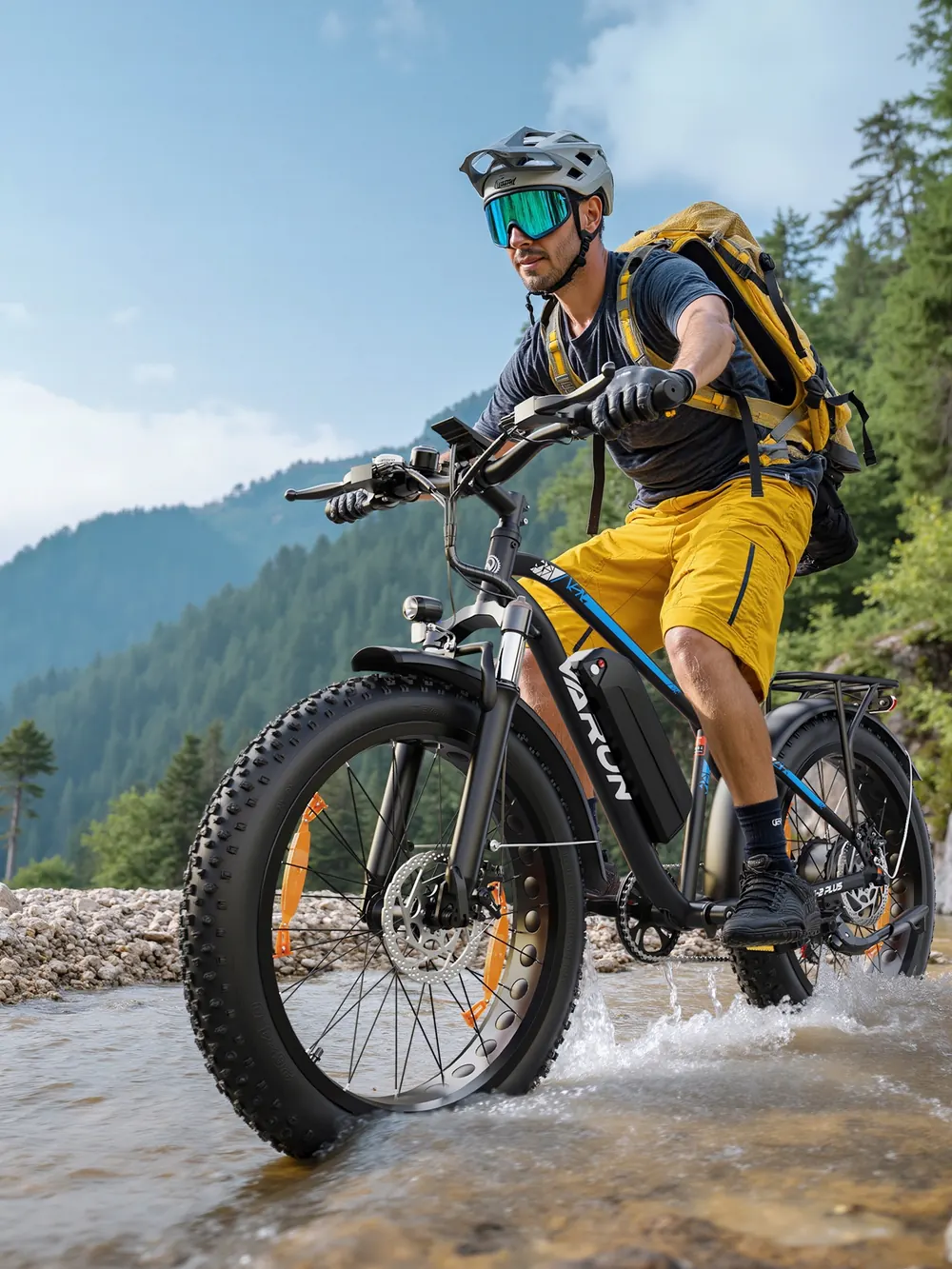
The M26-2 PLUS is a 26 inch wheel e-bike with 4.0 inch wide fat tyres. Varun pairs those tyres with a rear hub motor, a removable battery and mechanical disc brakes. The published specification is simple, but the details matter for everyday comfort and control.
The bike is sold as a mountain bike, yet it has no full suspension. Instead it leans on oversized tyres, a rigid frame and a fairly upright riding position to soak up bumps. That is a common approach at this price, and it works better on gravel and potholes than it does on proper singletrack.
What the name tells you
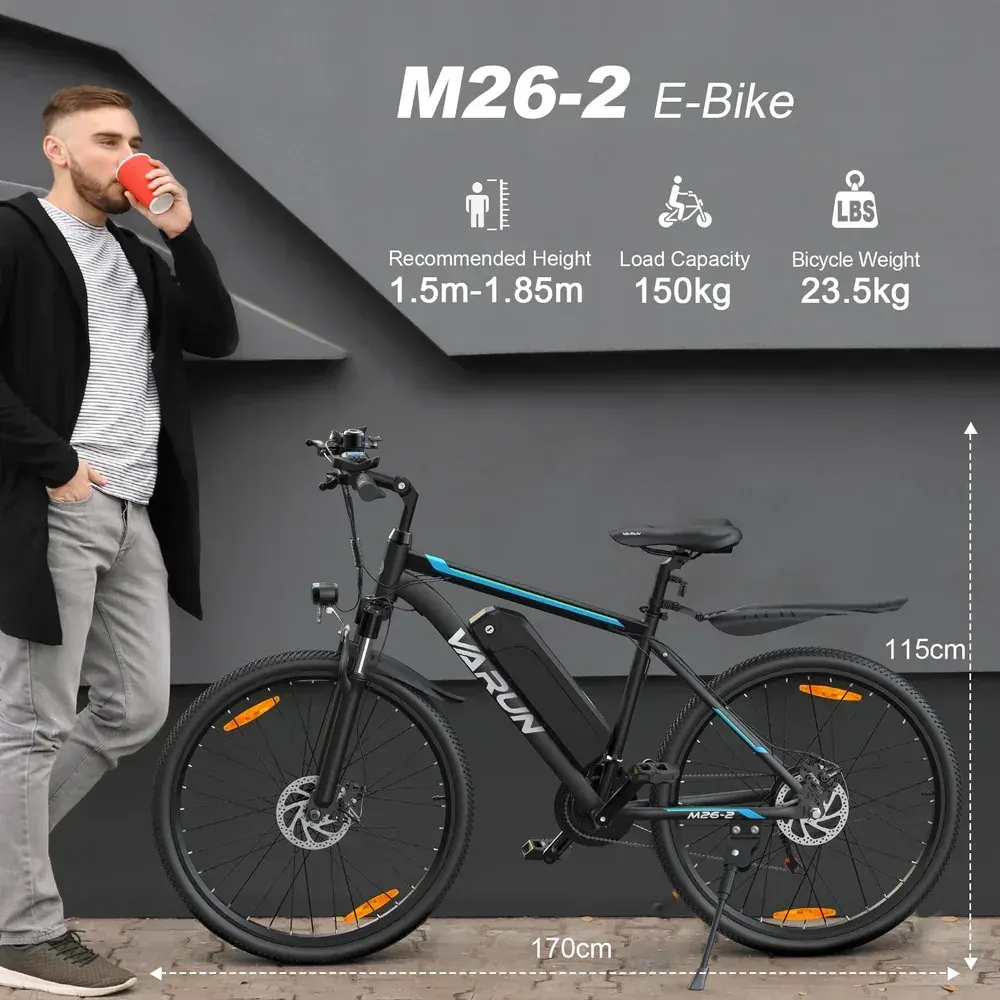
The M26-2 PLUS name points to the wheel size and the upgraded fat tyre build. Compared with the standard Varun M26-2, the PLUS version uses a slightly different frame finish and a larger battery setup according to the published specs. Both bikes share the same 26 inch fat tyre concept.
The PLUS badge mainly signals extra range. That is where the 99-mile headline comes from, and it is the first thing to question before you buy.
Price and position in the Varun range
At £809, the M26-2 PLUS costs more than the entry-level Varun M26-2 Fat Tire Electric Bike at £550, but less than the Varun S26-1 Fat Tire Electric Bike at £949. You are paying mostly for the bigger battery and the range it promises.
If you mainly ride short urban trips, the cheaper M26-2 may be enough. If you want the longest possible gap between charges and can accept a rigid frame, the PLUS version is the one to shortlist.
The 99-mile range claim, honestly explained
Varun quotes up to 99 miles of assisted range for the M26-2 PLUS. Like almost every e-bike brand, that figure assumes a light rider, smooth tarmac, low assist mode, warm weather and a battery in perfect condition. Real life rarely matches all five at once.
The manufacturer's range number is not a lie, but it is an ideal. It tells you the best possible case, not your daily expectation. The same is true of range claims from most electric bike brands sold in the UK.
How e-bike range numbers are usually produced
Range tests often use flat ground, minimal wind, a steady cadence and the lowest assistance setting. The rider may weigh far less than the average adult. Braking, traffic lights and hills all pull the real figure down.
The battery capacity and motor efficiency set the ceiling. After that, your weight, tyre pressure, route gradient and temperature do the real work. Fat tyres have more rolling resistance than narrow commuter tyres, which also reduces real range.
What range to expect on UK roads and hills
For a typical 75 to 85 kg rider on mixed UK terrain, a realistic assisted range is likely to sit between 40 and 60 miles in middle assist modes. In low assist on flat towpaths in summer, you could see more. In high assist, cold weather or hilly cities like Bristol or Sheffield, expect less.
We would not plan a 99-mile ride without carrying the charger. Treat the big number as a marketing promise and the 50-mile mark as a practical benchmark. That still covers most commutes and leisure rides with room to spare.
UK law and where this bike fits
The M26-2 PLUS must comply with the UK's EAPC rules. If it does, you can ride it without a licence, tax or insurance. That legal clarity is one reason this bike suits everyday UK buyers.
Always check the exact motor wattage and assisted speed on the listing. UK law caps continuous motor power at 250 watts and electric assistance at 15.5 mph. Above that the motor must cut out, and the bike becomes something else entirely.
EAPC rules you must follow
Under the government's electric bike rules, an EAPC must have pedals, show the motor wattage and the manufacturer, and not assist above 15.5 mph. You must be 14 or older to ride one.
The law also says the motor should not be able to propel the bike without pedalling above walking pace. The M26-2 PLUS is sold as a pedal assist bike, so it fits that description when set up correctly.
Where you can legally ride
You can ride an EAPC on roads, cycle lanes and most cycle paths. You cannot legally ride it on pavements. On shared paths and towpaths, give way to walkers and keep your speed sensible.
For more on e-bike law and safe use, the Cycling UK e-bike guidance and the Wikipedia overview of electric bicycle laws both explain the rules in plain English. They are worth a read before your first ride.
Real-world use cases for UK riders
Few people buy a fat tyre e-bike purely for mountain trails. Most use it for commuting, weekend towpath rides and carrying a bit of shopping. The M26-2 PLUS is best judged against those everyday jobs.
The bike is heavy compared with a hybrid e-bike, but it feels stable at low speed and handles potholes well. That makes it a sensible choice for riders who hate the jolt of thin city tyres.
City commuting
For a 5 to 10 mile each-way commute, the M26-2 PLUS removes much of the effort on climb-heavy routes. The fat tyres add comfort over broken tarmac, and the upright position gives you a clear view in traffic.
The weight is the main drawback. Carrying it up stairs at a railway station is a chore. If your commute includes steps or a narrow flat, a folding bike may serve you better.
Towpaths, gravel and light trails
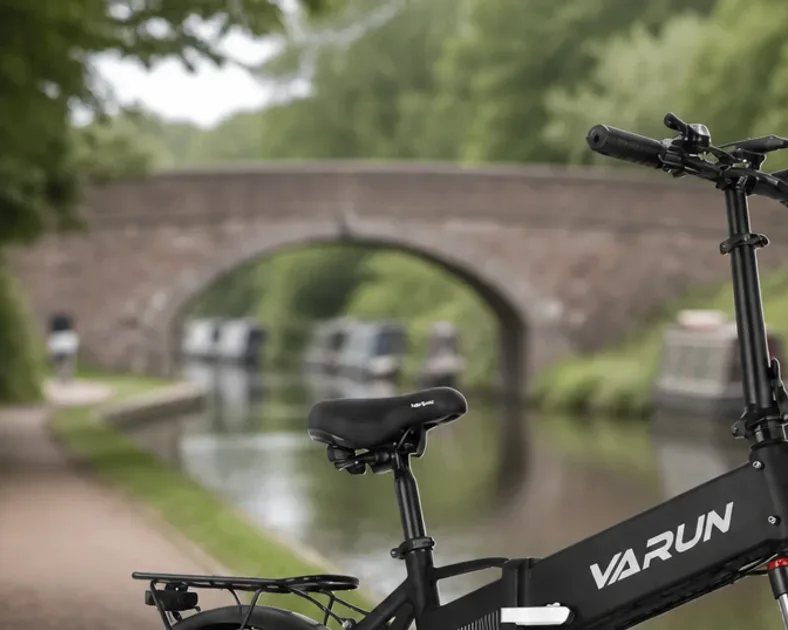
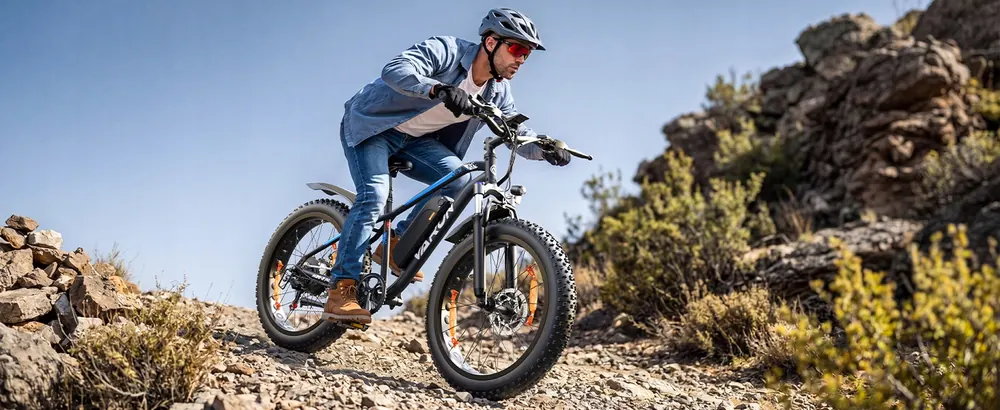
This is where the PLUS feels most at home. Wide tyres at low pressure grip canal towpaths, bridleways and compacted gravel without fuss. You can ride confidently past puddles and loose stones that would unbalance a skinny tyre.
It is not a hardtail mountain bike for jumps or rock gardens. The lack of front suspension means big hits travel straight to your wrists. Keep it to light trails, fire roads and family routes, and it will feel planted and calm.
Build quality and components
At £809, the M26-2 PLUS sits in the value tier of fat tyre e-bikes. The component list is adequate rather than premium, but the core parts should last if you look after them. The main frame, battery and motor are the heart of the bike.
We have not ridden or stress-tested this model ourselves, so this section is based on the published specifications and our experience of similar Varun builds at this price. It is a judgement, not a lab report.
Frame, tyres and comfort
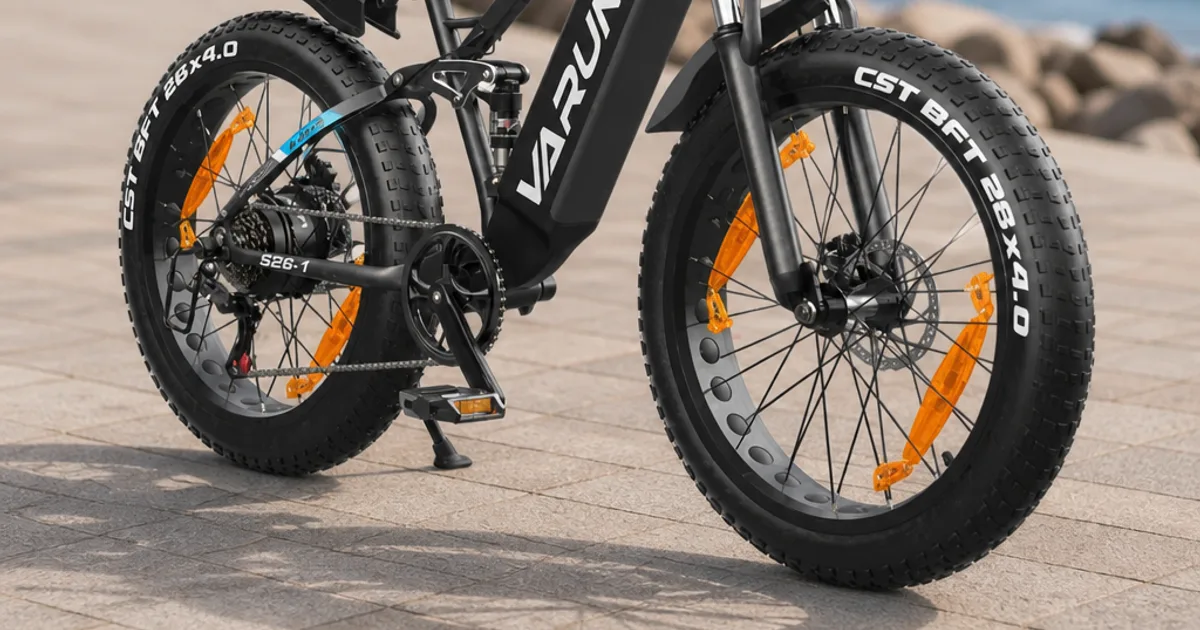
The frame is rigid, with no rear shock and no suspension fork on the standard listing. That keeps the price down and reduces servicing. The compensation is the 4 inch tyre contact patch, which acts like a low-pressure air spring.
You should run the tyres around 15 to 20 psi for comfort on rough ground. Higher pressures reduce rolling resistance but make the ride harsher. The wide bars and padded saddle help, though some riders still add a suspension seat post.
Motor, battery and controls
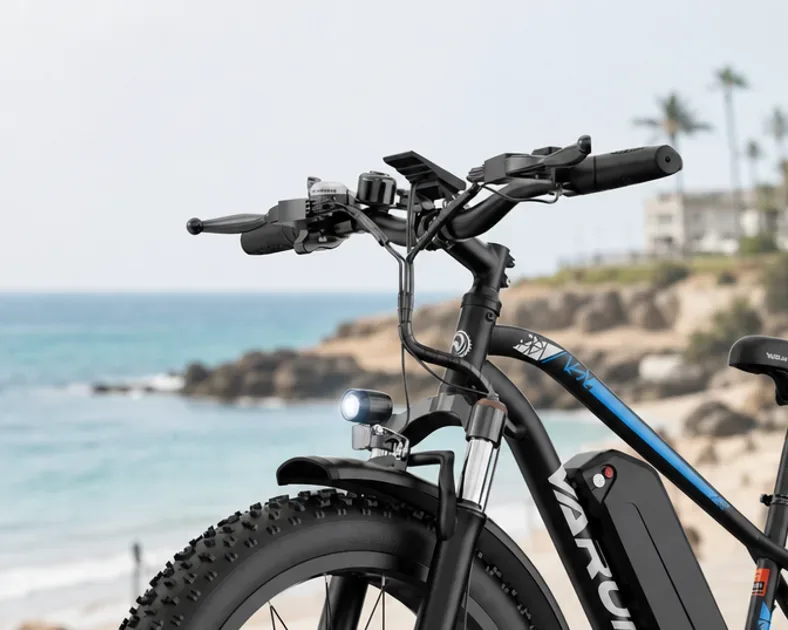
The rear hub motor provides pedal assistance with a handlebar display for mode selection. Varun quotes a maximum assisted speed of 15.5 mph to suit UK law. The battery is removable, which makes indoor charging easier and deters theft.
The exact battery capacity is not the headline here, because the 99-mile figure is the manufacturer's own combined claim. For daily use, the key point is simple: charge after long rides, avoid leaving it fully drained, and store it above freezing.
How it compares with other Varun fat tyre bikes
Varun has several fat tyre models around this price, and the differences can confuse buyers. The M26-2 PLUS sits between the basic M26-2 and the pricier S26-1. Understanding the gaps helps you avoid paying for a headline you do not need.
All three are legal EAPCs, all use fat tyres, and all are aimed at road and light trail use. The choice comes down to range, price and small hardware upgrades.
M26-2 PLUS vs standard M26-2 vs S26-1
- Varun M26-2 Fat Tire Electric Bike at £550 is the budget pick, with a smaller quoted range and a lower RRP. Choose it for short, flat commutes.
- The M26-2 PLUS at £809 is the range-focused middle option. The extra money goes to the larger battery behind that 99-mile claim.
- Varun S26-1 Fat Tire Electric Bike at £949 steps up the finish and components, but its higher price may not be worth it if range is your main need.
If you only ride 20 miles a week, the standard M26-2 does the job. If you want fewer charges on long weekend rides, the PLUS is the sweet spot. If you want a more polished build, look at the S26-1 and compare the full spec on the Mountain Bikes page.
One consistent warning applies across the range: fat tyres are heavier and slower to accelerate than hybrid tyres. They gobble a little more battery on tarmac. That is the price of the comfort and grip they give back.
Running costs, servicing and battery care
A cheap e-bike often turns expensive if you ignore basic care. The M26-2 PLUS has simple mechanical parts, so most servicing is DIY-friendly. The battery needs the most attention because it is the most expensive single component to replace.
Budget for a set of brake pads, occasional inner tubes and a yearly check at a local bike shop if you are not confident with tools. Keeping the chain lubricated and the tyres pumped adds free range and reduces wear.
Battery charge habits
Charge the battery indoors at room temperature, and avoid leaving it plugged in for days at a time. If you will not ride for a month, store it around half charge rather than full or empty. Cold weather reduces range temporarily, so charge it just before a ride in winter.
The battery is removable, which is a real advantage for people in flats. Take it out when locking the bike outside, both for security and to protect it from frost or heat.
Tyres, brakes and consumables
Fat tyre inner tubes cost more than standard 700c tubes, so treat punctures seriously. A sealant or puncture-resistant liner can save you money. Mechanical disc brakes are easy to adjust and cheap to replace compared with hydraulic ones.
The chain, cassette and freewheel wear faster if you ride in mud or grit. A quick rinse and dry after wet towpath rides will keep the drivetrain alive much longer than neglect.
Who should buy it and who should look elsewhere
The M26-2 PLUS suits a certain rider very well. If you want a stable, comfortable e-bike for towpaths, potholed roads and relaxed weekend exploring, it earns its place. The fat tyres and upright position are genuinely confidence-inspiring.
It also suits riders who hate charging regularly. The large quoted range, even after you knock it down for real-world use, still gets you through a long day out without range anxiety.
Buy it if
- Your rides mix rough roads, towpaths and light gravel.
- You want a legal EAPC with a removable battery and fat tyre comfort.
- You weigh range and stability more than light weight and fast acceleration.
- You need a simple mechanical bike you can maintain at home.
Look elsewhere if
- You carry your bike up stairs or onto trains daily.
- You ride technical mountain trails with rocks and drops.
- You want the fastest possible commute on smooth tarmac.
- You need hydraulic brakes or suspension at this price.
If you are still unsure between fat tyre models, the All Bikes page lets you compare the full Varun range side by side. The Varun M26-2 PLUS product page also carries the latest stock status and exact specifications.
Verdict: does the 99-mile claim sink or save it?
No, the 99-mile figure is not a promise most riders will see in daily life. But the M26-2 PLUS still offers strong value at £809 because the battery is clearly larger than the entry-level M26-2, and the fat tyre platform is genuinely useful in the UK.
The bike should not be judged as a mountain bike despite the label. Judge it as a comfortable, stable, range-focused commuter and towpath cruiser, and it makes a lot of sense. The honest score is around four out of five for value.
At this price you get a legal EAPC, a removable battery, fat tyre comfort and a range buffer that lets you ride all day with moderate use. You do not get suspension, light weight or premium brakes. For the right rider, that trade is well worth making.
If you want the longest range in the Varun fat tyre lineup without jumping to the most expensive model, the M26-2 PLUS is the one to choose. Just do not expect 99 miles on every ride, and you will be happy with it.
Frequently asked questions
Is the Varun M26-2 PLUS legal to ride in the UK?
Yes, when supplied as a 250W pedal assist bike with assistance cut off at 15.5 mph, it meets the UK EAPC rules. You must be 14 or older, and you cannot ride it on pavements.
What real range can I expect from the Varun M26-2 PLUS?
Varun quotes up to 99 miles in ideal conditions. For a typical UK rider on mixed roads and hills, a realistic assisted range is roughly 40 to 60 miles in middle assist modes. Low assist on flat paths can improve that.
Is the Varun M26-2 PLUS good for commuting?
It is comfortable and stable on rough roads, and the removable battery is handy. The main drawback is weight, especially if you need to carry it up stairs or onto a train.
Can I ride the Varun M26-2 PLUS on mountain bike trails?
It suits light trails, fire roads and gravel paths. It is not built for jumps, rock gardens or aggressive downhill riding because it has no suspension fork on the standard model.
How does the M26-2 PLUS compare with the standard Varun M26-2?
The PLUS version costs more and offers a larger quoted range, which is the main upgrade. The standard M26-2 at £550 is better value for short commutes, while the PLUS suits longer rides between charges.