Samebike RS-A01 Range Compared: Pro vs MEN 1.0 vs Pro-T
A practical UK comparison of the Samebike RS-A01 Pro, MEN 1.0 and Pro-T. We explain range, legal limits, and which model makes sense for everyday riding.

The line-up compared
| Model | Price | Motor | Range | Top speed | UK road status |
|---|---|---|---|---|---|
| SAMEBIKE RS-A01 Pro Electric Bike | £549.00 | 250W | 56 Miles | 15.5 Mph | Road legal |
| Samebike RS-A01 Pro-T Urban Electric Bicycle | £549.00 | 250W | 68 Miles | 15.5 Mph | Road legal |
| SAMEBIKE RS-A01 MEN1.0 Electric Mountain Bike | £589.00 | 500W | 56 Miles | 15.5 Mph | Private land only |
The RS-A01 name covers three Samebike electric bikes that look similar but are built for different rides. The Pro, MEN 1.0 and Pro-T share a motor and battery, yet small changes alter how each one feels.
This guide compares the range, legal status and practical fit of all three. We have not ridden these bikes, so we rely on Samebike's published specs, UK law and common sense.
The Pro and the Pro-T are £549 at Biktron, and the MEN 1.0 is £589. Prices change, so check the product pages before you decide.
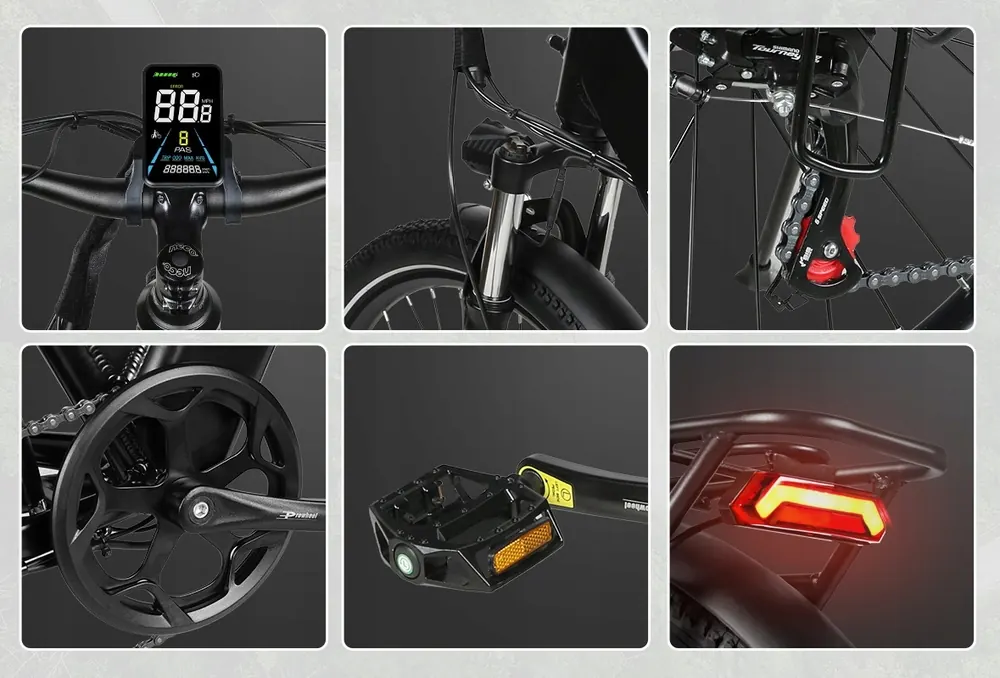
What the RS-A01 family has in common
The Samebike range is aimed at riders who want a legal electric bike without spending over £1,000. These three RS-A01 models sit at the budget end of that range.
Every RS-A01 uses a 250W rear hub motor, which is the legal maximum for continuous power in the UK. That means all three stop assisting at 15.5 mph.
The battery and controller are the same across the three models. So the electrical range is similar. The big differences are tyres, frame style and intended use.
Motor, battery and legal basics
All RS-A01 models meet the UK's EAPC rules for an electric bike. You do not need a licence, tax or MOT, and you can ride from age 14.
The motor only helps while you pedal. It is not a throttle-only machine, so range depends as much on your legs as on the battery.
Shared frame and day-to-day feel
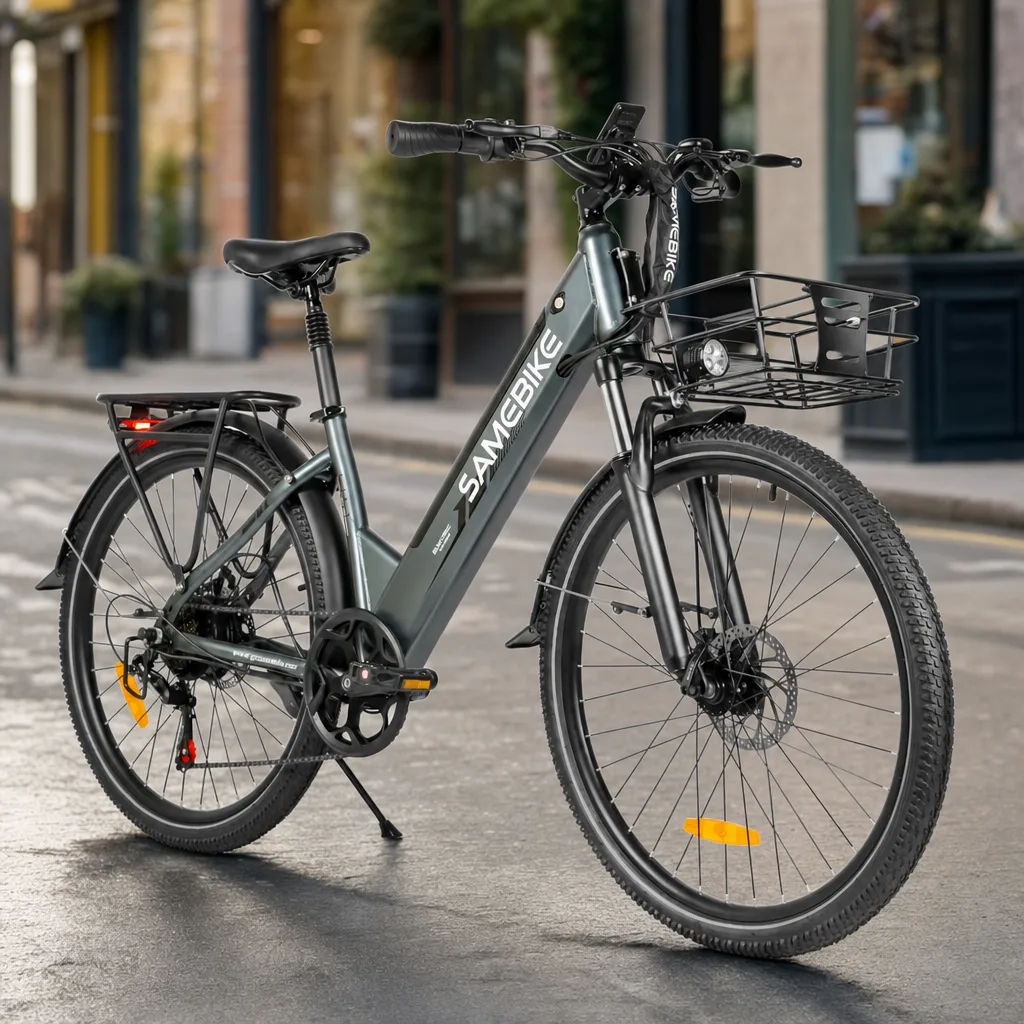
Samebike builds the RS-A01 around a step-through or low-step frame on the Pro-T, while the Pro and MEN 1.0 use a more traditional diamond or mountain shape.
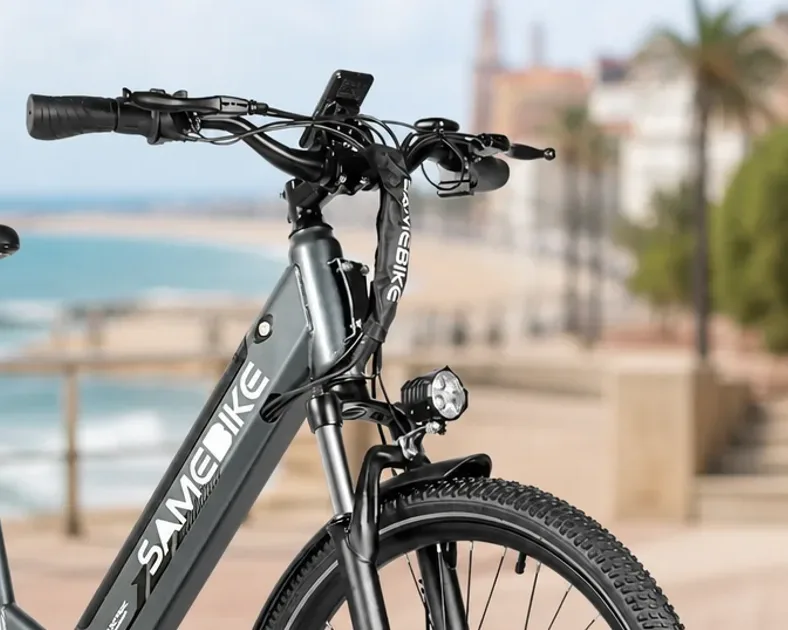
The controls are simple: a display, a few assist levels and a gear shifter. For everyday UK roads, all three are quiet and easy to manage.
- 250W rear hub motor, 15.5 mph assist limit
- Same battery and control system across all three
- Pedal assist, not a throttle-only bike
- Legal for UK roads without a licence or registration
Samebike RS-A01 Pro: the everyday all-rounder
The SAMEBIKE RS-A01 Pro Electric Bike is the base model most buyers look at first. It is currently £549, with an RRP of £650.
The Pro uses standard road tyres and a simple frame. That makes it the lightest option, which helps range on flat commutes.
If your ride is mostly tarmac, the Pro is hard to beat for the money. It does not have fat tyres or suspension, so it is best on smooth streets.
Range and who it suits
Because the Pro is lighter and rolls on narrower tyres, it tends to use slightly less battery per mile than the fat-tyre MEN 1.0. On a flat route at low assist, a full charge should comfortably cover a 20 mile round commute.
Hills and cold weather reduce that. Samebike does not publish one universal range figure, and we have not tested it. Plan a realistic 15 to 25 miles of useful assist on mixed UK terrain.
Strengths and compromises
The Pro is simple, cheaper to maintain and easy to store. Its weakness is comfort on rough paths, because it lacks front suspension and wide tyres.
- Lightest and most efficient RS-A01 for road use
- No fat tyres or suspension, so rough paths feel bumpy
- Best value for a flat urban commute
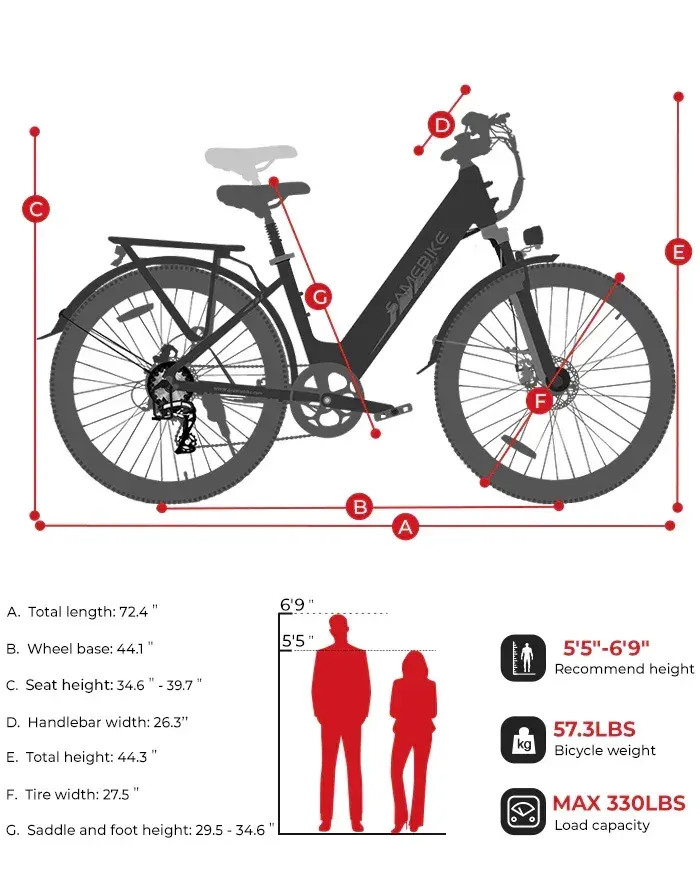
Samebike RS-A01 MEN 1.0: the mountain-style option
The SAMEBIKE RS-A01 MEN1.0 Electric Mountain Bike looks like a trail bike, but it is still a 250W pedal-assist machine. It is £589, down from £700.
It wears chunkier tyres and a mountain-style frame. That adds comfort and grip on gravel or towpaths, but it costs a little battery range.
If you ride canal paths, park tracks or potholed streets, the MEN 1.0 is the most forgiving. It is still legal on UK roads and cycle paths.
Biktron lists it under Mountain Bikes, but remember it is a legal electric bike, not a throttle dirt bike.
Range and terrain
The MEN 1.0's wider knobbly tyres create more rolling resistance. On the same battery, expect about 10 to 15 percent less range than the Pro on tarmac.
On soft ground, the trade is worth it. You get more confidence and less shaking, and the motor works the same legal 15.5 mph limit.
Strengths and compromises
The MEN 1.0 is the heaviest of the three, which matters if you carry it upstairs or lift it onto a train. It is also slightly slower to accelerate because of tyre weight.
- Mountain-style frame and tyres for rough paths
- Heavier, so range drops a little on smooth roads
- Not a full off-road e-bike, but great for light trails
Samebike RS-A01 Pro-T: the urban tourer
The Samebike RS-A01 Pro-T Urban Electric Bicycle is the city-focused option, and at £549 (RRP £650) it matches the Pro on price.
The Pro-T uses a step-through frame and city-style tyres. It is built for easy mounting, upright riding and carrying shopping or a bag.
Range sits between the Pro and MEN 1.0. Its tyres are not as fat, but the upright position catches more wind at speed.
You can see it alongside other City Bikes on the Biktron site.
Range and city riding
In stop-start city traffic, the Pro-T's smooth power delivery helps you pull away from lights without wasting energy. At 15.5 mph, all three are limited, so range is more about how often you stop.
For a typical urban loop of 10 to 15 miles a day, the Pro-T should manage on one charge. If your route is longer, use a lower assist level or charge at work.
Strengths and compromises
The step-through frame is brilliant if you wear a skirt, have stiff hips or just want to hop on and off quickly. The downside is a more relaxed geometry that some riders find less sporty.
- Step-through frame, ideal for city and mixed use
- Upright position is comfortable but slightly less aerodynamic
- The biggest RRP saving of the three, at £450 below RRP
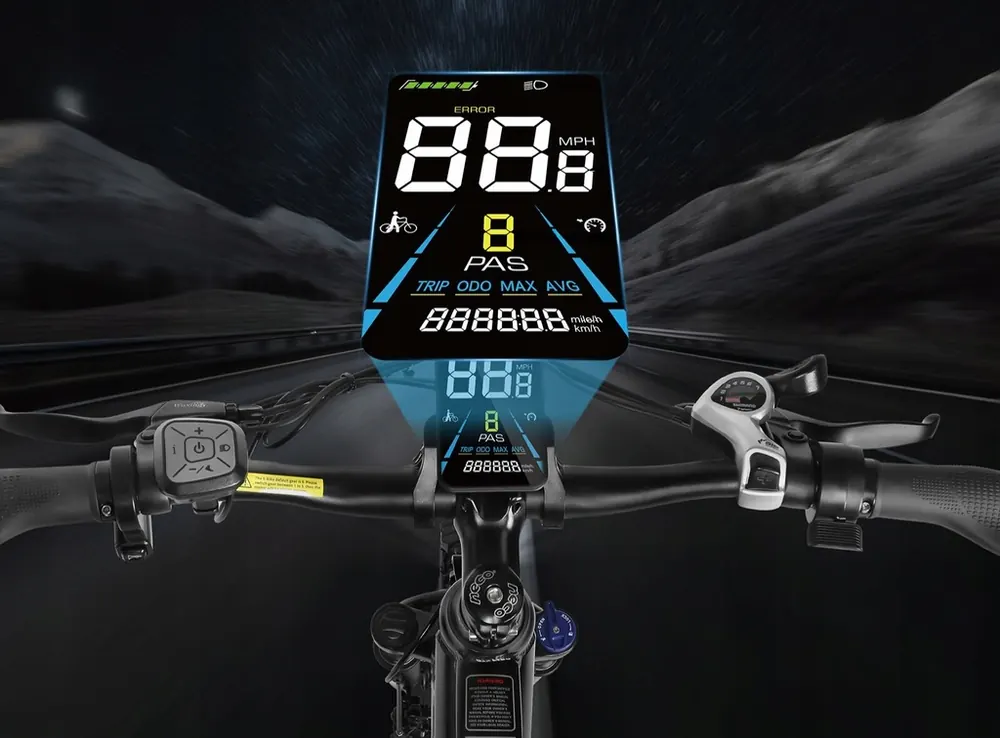
What affects real-world range on all three
All three RS-A01 models share the same battery capacity, so no model has a magic range advantage. Your battery drains faster with hills, heavy loads, low tyre pressure and cold weather.
Rider weight matters too. A 90 kg rider on a hilly route will get noticeably fewer miles than a 65 kg rider on flat ground.
Assist level is the biggest single factor. Eco mode can nearly double your range compared with the highest setting.
Hills, weight and weather
UK winters are hard on e-bike batteries. Lithium cells deliver less energy when it is below 10°C, and headwinds add drag. The GOV.UK electric bike rules do not mention range, but they confirm the 250W and 15.5 mph limits you must respect.
The same applies to steep climbs. A long hill at full assist will eat battery quickly, so choose a model with lower weight if you live on a hill.
Assist level and tyre choice
Use the lowest assist that keeps you moving. Save high assist for junctions and hills, and you will extend every charge.
Tyre pressure is free range. Check yours weekly. Soft tyres on the MEN 1.0 make the battery work harder than it should.
UK e-bike law for all RS-A01 models
Every RS-A01 is an electrically assisted pedal cycle (EAPC) if it has a 250W motor and stops helping at 15.5 mph. You must be at least 14 years old to ride one.
You do not need insurance, road tax or a driving licence. However, if you modify the bike to go faster or use a throttle above 6 km/h, it becomes a moped in law.
EAPC rules you must follow
The UK government's electric bike rules explain this clearly. The motor must have a maximum continuous rated power of 250W.
The bike must show either the power output or the manufacturer, and the battery voltage. Samebike labels these on the frame and manual.
Where you can ride
Legal EAPCs can use cycle lanes, bridleways and most off-road cycle routes where push bikes are allowed. They are not allowed on motorways, and you must follow the same traffic signs as a pedal cycle.
For more on cycle path access, Cycling UK explains e-bike rights and gives sensible advice for new riders.
Ways to get more miles from your RS-A01
You cannot add range without buying a second battery, but small habits help. Keep the chain lubricated, tyres firm and the bike clean.
Charge indoors at room temperature. Avoid leaving the battery fully charged for weeks, because that shortens its life.
Practical range habits
- Use a lower assist level on flat sections
- Pump tyres to the pressure printed on the sidewall
- Remove panniers or heavy locks when you do not need them
- Shift gears early so the motor is not straining uphill
Storage and battery care
If you stop riding over winter, store the battery at around half charge in a cool, dry place. Top it up to full before your first long ride.
Which RS-A01 should you buy?
The right choice depends on where you ride and how much comfort you need. All three cost the same right now, so price is not the deciding factor.
For a flat road commute, pick the Pro. For rough paths and towpaths, pick the MEN 1.0. For easy mounting and city errands, pick the Pro-T.
Commuters vs leisure riders
If you ride 5 to 10 miles each way on tarmac, the Pro gives the best range per charge. If your weekends include gravel, the MEN 1.0 is more fun.
The Pro-T splits the difference. It is the easiest to live with day to day, especially if you carry bags or wear everyday clothes.
Our honest verdict on value
At £549 for the Pro and the Pro-T, and £589 for the MEN 1.0, all three are good value for a legal UK e-bike. The Pro-T stands out because it gives you a step-through city frame for the same money as the Pro. The Pro is the most efficient and the MEN 1.0 is the most capable on rough ground. None are perfect, but for the money they cover nearly every everyday use.
If you are still unsure, the budget e-bike brand comparison may help you see how Samebike sits against similar brands. You can also browse All Bikes to compare other options.
Frequently asked questions
What is the real-world range of the Samebike RS-A01?
We have not tested it, and Samebike does not publish one figure. In typical UK conditions, expect roughly 15 to 25 miles of useful assist, with less on hills and in cold weather.
Are all three RS-A01 models legal on UK roads?
Yes, if unmodified. They have a 250W motor and stop assisting at 15.5 mph, so they meet EAPC rules. Riders must be 14 or over. No licence, tax or MOT is needed.
Which RS-A01 has the best range?
The Pro is likely the most efficient on tarmac because it is lighter and has narrower tyres. The MEN 1.0 uses more battery on rough ground. The Pro-T sits in between.
Can I ride an RS-A01 off-road?
The MEN 1.0 handles light trails and towpaths, but all three are legal only where pedal cycles are allowed. They are not throttle dirt bikes.
Do I need insurance or a licence for an RS-A01?
No, not for a legal EAPC. However, if you modify the bike to go faster or use a throttle above 6 km/h, it may become a moped and require registration, insurance and a licence.