Engwe P275 SE Review: The £749 Commuter, Full UK Test 2026
The Engwe P275 SE is a £749 trekking e-bike with a 250W motor and torque sensor. This review covers UK legality, range expectations, and how it compares to other Engwe models.

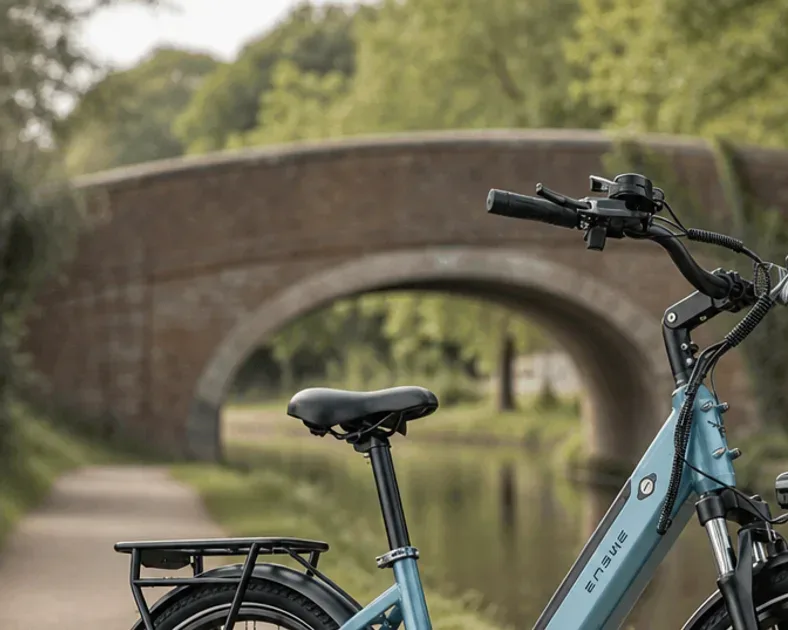
The Engwe P275 SE is the commuter-focused model in the Engwe range. At £749, it undercuts many branded e-bikes while promising a torque sensor and hydraulic brakes. This review explains what that buys you in 2026.
We have not ridden the P275 SE. Instead, we judge it from the published specification and its real price. It is a serious option if you want a legal 250W e-bike without spending over a grand.
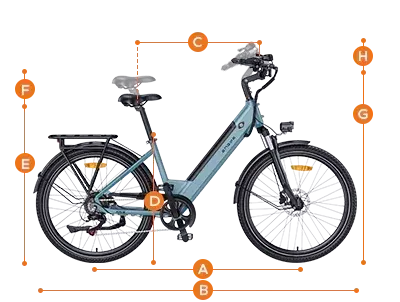
Who is the Engwe P275 SE for?
The P275 SE suits riders who want a dependable commuter for daily trips. Its trekking frame, mudguards and rack make it practical for work runs and shopping. You get proper lights and a kickstand, so it is ready to use out of the box.
It also works for leisure rides on tarmac and light gravel paths. The 27.5-inch wheels roll smoothly over potholes and kerbs. If you mostly ride in town, this bike is in its comfort zone.
Commuting and everyday trips
For a five to ten mile commute, the P275 SE removes the sweat from hills. The torque sensor matches your pedalling effort, so assistance feels natural. The included rack takes a pannier bag, which helps carry a laptop and lunch.
You still need to obey traffic rules and wear a helmet. The bike is legal on roads and cycle lanes, but not on pavements. Check your local cycle network before you ride.
Weekend and leisure rides
At weekends, the P275 SE can handle a canal towpath or a park loop. The front suspension fork takes the sting out of rough tarmac. The upright riding position keeps pressure off your wrists on longer spins.
It is not a mountain bike, so avoid rocky descents. For gentle off-road use, the tyres offer enough grip. If you want fat tyres for more grip, look at the City Bikes collection for alternatives.
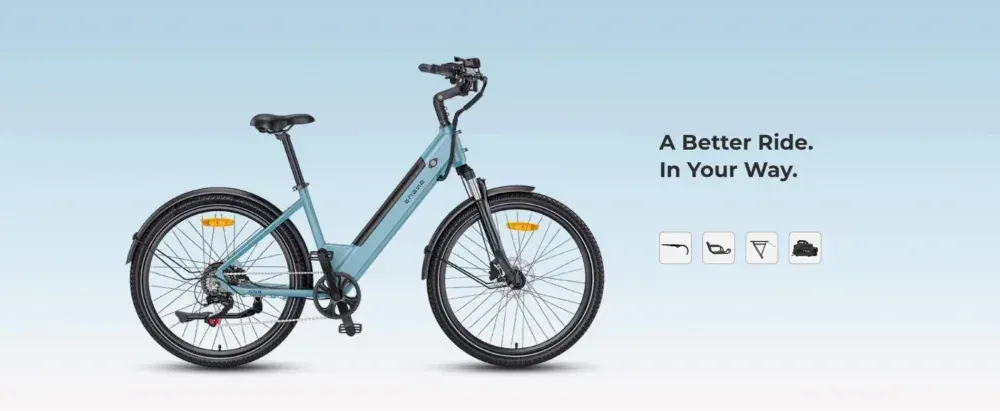
What you get for £749
The P275 SE packs features often found on £1,200 plus bikes. A torque sensor, hydraulic disc brakes and a Shimano 7-speed drivetrain are the headline items. The frame has a neat integrated battery and a rear rack welded on.
Engwe quotes a maximum range of around 47 miles. Treat that as a best-case figure. Real-world range on UK hills and in cold weather will be lower, usually 25 to 35 miles.
Motor and pedal assist
The 250W rear hub motor is the legal maximum for UK e-bikes. It provides smooth acceleration up to 15.5 mph. The torque sensor measures how hard you pedal, not just whether you pedal. That means the motor responds instantly when you press on the pedals.
There are several assist levels, from eco to turbo. You can also ride with the motor off, but the bike is heavy. Expect the motor to do most of the work on hills.
Battery and real-world range
The 36V battery is removable, so you can charge it indoors. A full charge takes around 5 to 6 hours. The battery locks to the frame with a key, which deters opportunistic theft.
Range depends on rider weight, tyre pressure and wind. Use a lower assist level and you will get closer to the quoted figure. In winter, expect 20 percent less range.
Gears, brakes and comfort
The Shimano 7-speed gear system gives you a good spread for climbs and flats. The hydraulic disc brakes offer strong stopping power in wet weather. You get a suspension fork with 60mm travel, which helps on broken roads.
Here is a quick summary of the main kit:
- 250W rear hub motor with torque sensor
- 36V removable battery, quoted range up to 47 miles
- Shimano 7-speed gears
- Hydraulic disc brakes front and rear
- Front suspension fork, 60mm travel
- Rear rack, mudguards, lights and kickstand included
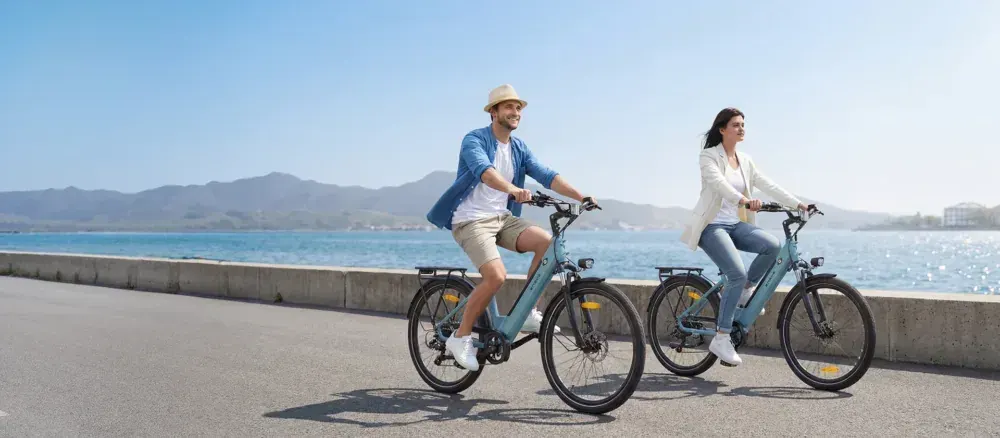
UK legality and where you can ride
The P275 SE meets the UK's Electrically Assisted Pedal Cycle (EAPC) rules. That means you can ride it anywhere a normal bicycle can go. You do not need a licence, tax or insurance.
You must be at least 14 years old. The motor must cut out at 15.5 mph. The continuous rated power must not exceed 250W. The P275 SE complies with all three.
What the law says
You can read the full rules on the Government's electric bike page. It confirms that EAPCs are treated as bicycles, not mopeds. You can use cycle lanes and shared paths.
Riding on the pavement is illegal unless a sign allows it. The Royal Society for the Prevention of Accidents offers safety advice for e-bike riders. Always consider pedestrians and other cyclists.
Where you can legally ride
You can ride on roads, cycle lanes, bridleways and byways. On canals, e-bikes are allowed on towpaths, but you should slow down near walkers. National parks have their own rules, so check before you visit.
The P275 SE is not a speed pedelec. It cannot be derestricted legally for road use. Keep it standard and you stay within the law.
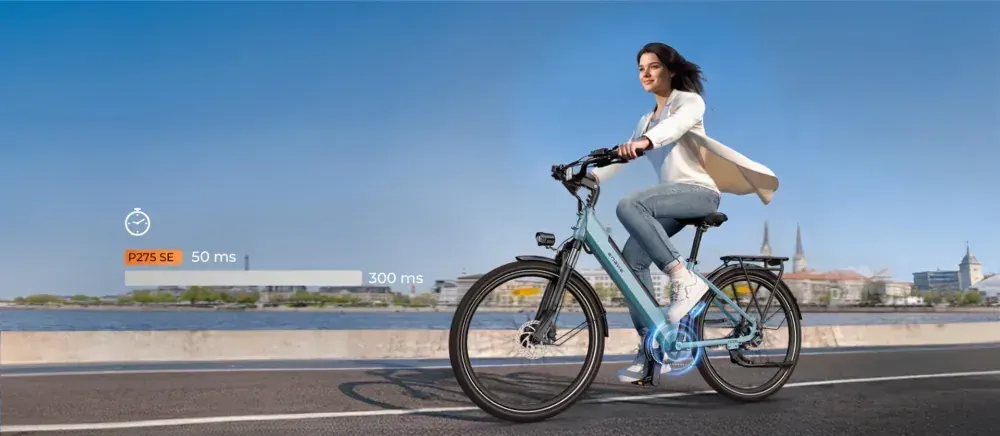
Real-world range and battery care
Manufacturers quote range in perfect conditions, with a light rider, smooth tarmac and no wind. Your commute will rarely match that. Expect 25 to 35 miles from a full charge in mixed UK conditions.
Cold weather reduces battery capacity. Store the battery indoors and let it warm up before charging. Do not leave it fully charged for weeks; 60 percent is ideal for storage.
What affects range
These factors have the biggest impact on how far you go:
- Rider weight and luggage
- Hills and headwinds
- Assist level and gear choice
- Tyre pressure and road surface
- Air temperature
Using eco mode on flat roads stretches the battery. Turbo mode is best saved for steep climbs or busy junctions.
Charging and storage
Charge the battery after every ride if you used more than half the capacity. A full charge takes around 5 to 6 hours. Use only the supplied charger, and keep it away from flammable materials.
If you store the bike for winter, remove the battery and keep it at room temperature. Check the charge every few weeks. This helps the cells last longer.
How the P275 SE compares to other Engwe models
Engwe makes several e-bikes at different price points. The P275 SE is the cheapest with a torque sensor and a traditional frame. If you want folding or more power, consider the alternatives below.
The table shows the key differences at a glance:
| Bike | Best for | Key difference | Price |
|---|---|---|---|
| Engwe P275 SE | Commuting and trekking | Torque sensor, 27.5-inch wheels | £749 |
| Engwe L20 3.0 Boost | Folding and compact storage | Folding frame, fat tyres | £1019 |
| Engwe Engine Pro 3.0 Boost | Off-road and full suspension | Full suspension, more power feel | £1669 |
All three are legal EAPCs. They differ in frame style, tyre width and suspension. Your choice depends on where you ride and where you store the bike.
P275 SE vs L20 3.0 Boost
The Engwe L20 3.0 Boost folds for car boots and train travel. It has 20-inch fat tyres and a step-through frame. The P275 SE has larger wheels and a more efficient ride on tarmac.
If you need to carry the bike upstairs or store it in a flat, the L20 is easier. The P275 SE is better for longer rides because the big wheels roll faster. Both have hydraulic brakes and 7-speed gears.
P275 SE vs Engine Pro 3.0 Boost
The Engwe Engine Pro 3.0 Boost is a folding fat tyre bike with full suspension. It is built for rough trails and uneven ground. The P275 SE is lighter and more nimble on city streets.
Spend more on the Engine Pro if you ride off-road regularly. Choose the P275 SE if your riding is mostly commuting and tarmac paths. The P275 SE also costs less than half as much.
Things to consider before buying
No bike is perfect for everyone. The P275 SE has a few compromises you should know about. Think about weight, storage and tyre choice before you order.
The bike weighs around 24kg with the battery. That is normal for an e-bike, but heavy to lift onto a train or into a car. If you need a lighter bike, consider a folding model from Folding Bikes.
Weight and storage
At 24kg, the P275 SE is not fun to carry up stairs. A ground floor or garage is ideal. If you live in a flat without a lift, think about a lighter or folding option.
The battery is removable, which saves 2.5kg when you carry the frame. You can also charge the battery at your desk while the bike stays locked outside.
Ride quality and tyres
The 27.5-inch wheels with 1.95-inch tyres suit tarmac and light gravel. They are not fat tyres, so they can slip on mud or deep sand. The front suspension helps, but it is not a mountain bike fork.
If your commute includes canal paths or forest tracks, the P275 SE copes fine as long as you slow down. For serious off-road use, pick a bike with wider tyres and more travel.
Our verdict on the Engwe P275 SE
The P275 SE offers excellent value at £749. You get a torque sensor, hydraulic brakes and a full commuter kit for the price of many basic hub-motor bikes. It is our pick for urban riders on a budget.
It is not the most powerful or the lightest e-bike. But for daily commuting and weekend leisure, it does everything you need without breaking the bank. The Engwe P275 SE is a genuine bargain in the UK e-bike market.
Strengths
- Torque sensor gives natural pedal response
- Hydraulic disc brakes and 7-speed gears
- Full commuter kit included (rack, lights, mudguards)
- Price of £749 is well below comparable models
Weaknesses
- Heavy at around 24kg
- No suspension lockout
- Tyres are not suited to deep mud or sand
- Quoted range is optimistic in cold weather
If you want a legal, low-maintenance e-bike for everyday trips, the P275 SE is hard to beat. Check the latest stock on the product page, as this model often sells quickly at this price.
Frequently asked questions
Is the Engwe P275 SE legal on UK roads?
Yes. It meets EAPC rules with a 250W motor and 15.5 mph assisted limit. You need to be 14 or older, and you do not need a licence or insurance.
How far can the Engwe P275 SE go on one charge?
Engwe quotes up to 47 miles, but real-world range is usually 25 to 35 miles. Hills, cold weather, rider weight and assist level all reduce the distance.
Does the P275 SE have a throttle?
No. It uses pedal assist only with a torque sensor. You must pedal to get motor assistance, which keeps it legal as an EAPC in the UK.
Can I ride the P275 SE in the rain?
Yes, the bike is splash resistant and the hydraulic brakes work well in wet conditions. Avoid submerging the motor or battery, and dry the chain after rides.
Is the battery removable for charging indoors?
Yes. The 36V battery unlocks with a key and can be charged separately. A full charge takes around 5 to 6 hours.