DYU D3F vs A1F: Which DYU Folding E-Bike Should You Buy?
Two of the cheapest folding e-bikes go head to head. The D3F costs less, but the A1F adds more range and comfort. Here's the honest breakdown.

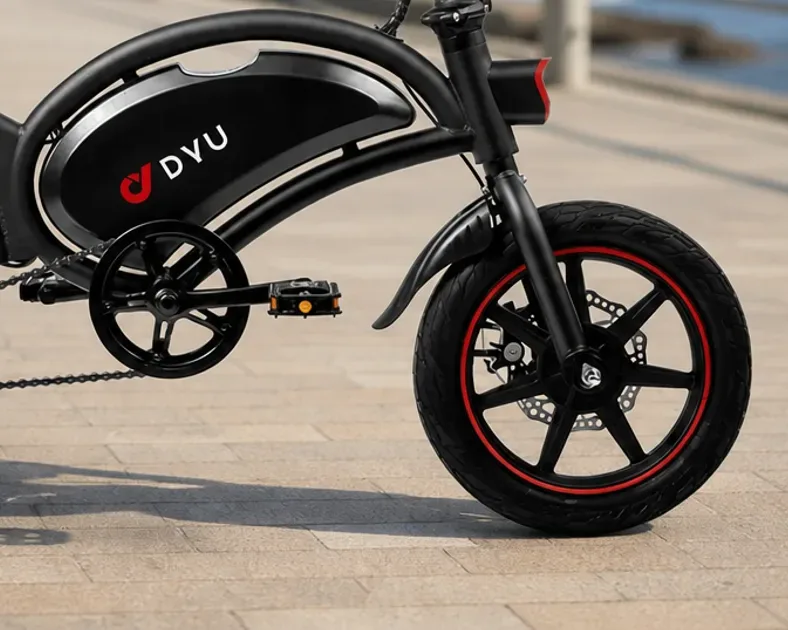
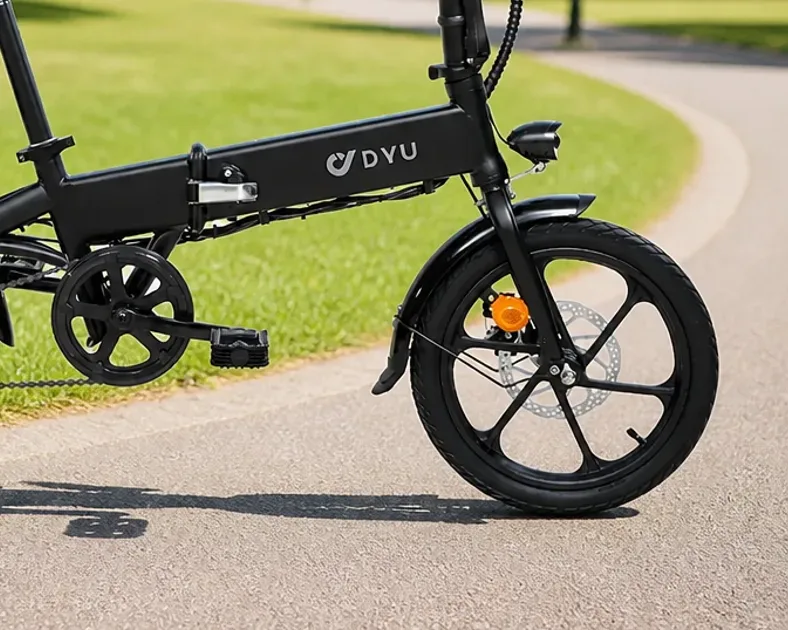
The DYU D3F and DYU A1F are two of the most affordable folding electric bikes we sell at Biktron. They look similar at first glance, but the price gap is real. This guide explains which one suits your rides, your budget and your storage space.
The D3F is currently £339 and the A1F is £589. That £250 difference buys you a larger battery, a stronger motor and a more comfortable ride. But cheaper can be the right choice if your trips are short and flat. You can see both models in the full DYU range.
We have not ridden both bikes on a test track, but we know the manufacturer's published specifications and what they mean on UK roads. This comparison is based on those specs, UK e-bike law and our experience helping everyday buyers.
DYU D3F vs A1F: What You Get for Your Money
Price and key differences
The D3F and A1F both fold small, but they are aimed at slightly different riders. The D3F is the cheapest DYU folder we stock at £339. The A1F costs £589 and adds a bigger battery, a more powerful motor and a more relaxed ride.
Both bikes are legal to ride as Electrically Assisted Pedal Cycles in the UK. They cut out at 15.5 mph and do not need a licence. You can read the official electric bike rules on GOV.UK.
Here is a quick look at what each model gives you.
- The DYU D3F is a no-frills 14-inch folder. It is light, cheap and fine for flat, short commutes.
- The DYU A1F has a larger battery and a stronger motor. It copes better with hills and longer trips.
- Both fold at the frame and have folding pedals. You can carry them into a flat or a train vestibule.
This table shows how each bike fits common UK scenarios.
| Use case | DYU D3F | DYU A1F | Practical note |
|---|---|---|---|
| Short flat commute under 3 miles | Excellent | Very good | Both work, but the D3F saves you £250 |
| Hilly or 10+ mile round trip | Good | Better | The A1F's bigger battery and motor reduce range anxiety |
| Carrying upstairs daily | Better | Good | The D3F is lighter because its battery is smaller |
The choice gets clearer once you know your daily route. If you mostly ride a flat mile to the station, the D3F is hard to beat on price. If your ride includes hills or a longer loop, the A1F is worth the extra money.
Folding Size and Everyday Portability
Which one fits under a desk?
Both DYU folders use a simple frame hinge and fold in under 10 seconds once you get used to it. You fold the pedals, drop the handlebar and lower the seat. The folded package is small enough for a hallway cupboard.
The D3F is the lighter of the two because its motor and battery are smaller. That matters when you carry it up two flights of stairs. The A1F is still manageable, but you will notice the extra weight on a long walk.
Neither bike is a full-size folder like the 20-inch models we sell. If you want something that rides closer to a normal bike, look at our folding electric bikes category. But for true portability, these 14-inch folders win.
Train, bus and flat living
Folders work well on trains because you can tuck them between seats. A few rail operators ask you to cover the bike, but most accept a folded e-bike as luggage. The smaller the fold, the easier that is.
In a small flat, the D3F takes up less visual space and is easier to lift onto a wall hook. The A1F is a similar size folded, but the extra weight can make wall storage more awkward. Pick the D3F if you carry it daily.
Carrying a bike up stairs every day is tiring. The D3F is kinder to your shoulders and your back. If you live in a third-floor flat with no lift, that weight difference becomes very important.
Motor, Battery and Real-World Range
What the manufacturer quotes
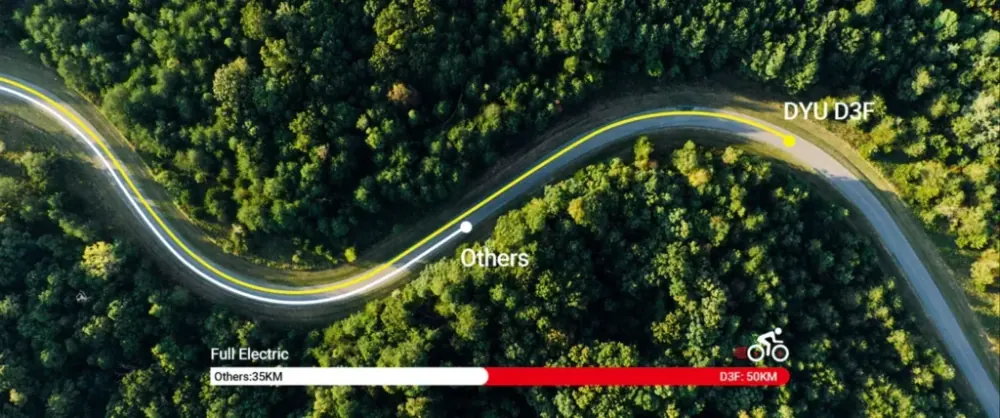
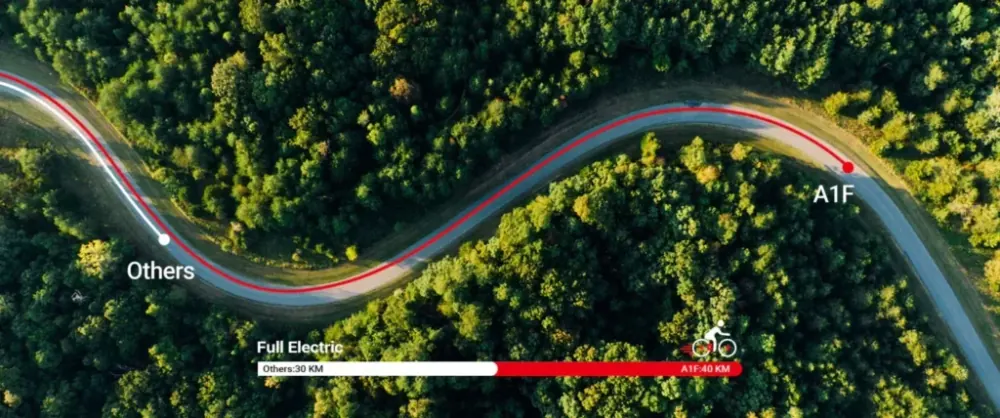
DYU quotes a longer range for the A1F than the D3F, mainly because the A1F has a larger battery. Manufacturer figures assume a light rider, smooth tarmac, low assistance and warm weather. Real UK conditions are rarely that kind.
On cold mornings or hilly routes, expect noticeably less range. That is normal for all e-bikes. The Cycling UK guide to electric bikes explains how temperature and terrain affect battery life.
For a short commute of two or three miles each way, the D3F will still have plenty of charge left. For a ten-mile round trip with a steep climb, the A1F gives you a much safer margin. It is better to have extra battery than to pedal a heavy e-bike home unassisted.
Charging and battery care
Both bikes charge from a standard UK socket. Charging times are similar, but the A1F takes longer because its battery is bigger. You do not need a special charger, and you can top up at work if you carry the charger.
Store the battery indoors in cold weather. That helps it keep its range. Never leave a lithium battery in direct sun or charge it overnight unattended if you can avoid it. These are sensible habits for any e-bike.
Ride Comfort and Handling on UK Streets
Small wheels, real roads
Small wheels accelerate quickly and turn sharply. They also feel every bump more than a 26-inch wheel. If your route has potholes, tram lines or cobbles, you will need to stand up or slow down on both bikes.
The A1F is the more comfortable of the two for longer rides. Its extra weight and bigger battery sit low in the frame, which makes it feel steadier. The D3F is more nimble but can feel twitchy on rough surfaces.
Neither bike is a mountain bike. If you ride on gravel or uneven canal paths, a folding bike with fatter tyres may suit you better. But for tarmac commutes, both are perfectly fine.
Brakes and mudguards
Both bikes come with basic brakes and small mudguards. Check the product pages for exact details, because specs can change between batches. Wet UK roads mean you should give yourself extra stopping distance.
If you ride in the rain often, consider adding a rear rack or brighter lights. The A1F is a little more stable in wind because of its extra mass. The D3F is easier to manage in a crowded bike shed.
UK E-Bike Law: Both Are Legal, But Know the Rules
EAPC basics
Both the D3F and A1F are classed as Electrically Assisted Pedal Cycles. The motor must be no more than 250 watts and the assistance must cut out at 15.5 mph. Both bikes meet those rules.
You must be at least 14 years old to ride an e-bike on UK roads. You do not need a licence, tax or insurance. Helmets are not compulsory but are strongly recommended by road safety groups like RoSPA.
Because these are folding bikes, you can take them on trains and buses more easily than a full-size e-bike. That makes them a practical car replacement for many UK commuters.
Where you can ride
E-bikes are allowed on roads and most cycle paths. You cannot ride them on motorways or on pedestrian-only pavements unless signs say cycles are permitted. Stay below the speed limit and use lights at night.
If you ever want to check the full text of the law, the Electrically Assisted Pedal Cycles Regulations 2015 are public. For everyday riding, you just need to keep the bike roadworthy and pedal to get assistance.
Practical Commuting and Storage
Mixed train and bike commutes
The D3F is the easier bike to carry up stairs and onto trains because it is lighter. It folds small enough to slide under a desk in many offices. That means you can charge it while you work.
The A1F is heavier but still compact. If your commute includes a long ride on the bike, the extra range means you might not need to charge at work at all. That is a big plus if you have no secure plug socket.
Both bikes can be locked with a sturdy D-lock through the frame. A folding bike is a target for thieves, so never leave it outside overnight if you can avoid it.
Where the D3F really shines
The D3F is the ultimate budget city hopper. It costs £339, which is less than many monthly train tickets. For a flat two-mile commute, it is all the bike most people need.
It is also the better choice for caravan owners, boat owners and anyone with very limited storage. You can lift it into a car boot without help. The lower price means you worry a little less about scratches.
Who Should Buy the DYU D3F?
The short answer
Buy the D3F if your main goal is saving money and space. It is ideal for flat, short trips where you do not need a huge battery. It is also the lighter option for carrying.
- Your commute is under 3 miles each way
- You live upstairs or take a train daily
- You want the cheapest reliable folding e-bike
- You rarely ride in very hilly areas
At £339, the DYU D3F is one of the best value folding e-bikes we sell. It is not fancy, but it does the job.
Who Should Buy the DYU A1F?
The short answer
Buy the A1F if you want more range and a more comfortable ride without moving up to a much bigger bike. It costs more, but the bigger battery pays off on longer or hillier routes.
- Your round trip is 8 miles or more
- Your route has moderate hills
- You value comfort over the lightest carry weight
- You want a folding bike you can grow into
The DYU A1F is the more capable of the two. If you can stretch to £589, it is the safer choice for most UK commuters.
Final Verdict: Which DYU Folding E-Bike Wins?
For most UK riders, the DYU A1F is the better all-rounder. It has more range, a stronger motor and a steadier ride. The extra £250 buys real everyday usability, not just a brand name.
The D3F still deserves a place in your shortlist if your rides are short and flat. It is one of the cheapest quality e-bikes you can buy, and it folds small enough for almost any flat. You will not regret saving money if you only ride a mile or two.
Choose the D3F for pure portability and rock-bottom price. Choose the A1F for longer commutes and fewer battery worries. Both are legal, practical and easy to live with.
You can compare both models in our all bikes collection, or read our other buying guides for more help.
Frequently asked questions
Is the DYU D3F or A1F legal to ride in the UK without a licence?
Yes. Both are EAPCs with a 250W motor and 15.5 mph cut-off. You must be 14 or over, and wearing a helmet is strongly recommended.
Which one is better for a short train commute?
The D3F because it is lighter and cheaper. It folds small and carries easily up stairs. The A1F works too if you need more range.
How long does the battery last on these DYU folders?
DYU quotes a higher range for the A1F, but real range is lower in cold weather, on hills and with a heavy rider. Expect to charge more often in winter.
Can I ride a folding e-bike on UK cycle paths?
Yes, on most cycle paths and roads. Avoid pedestrian-only pavements unless signs allow cycles. Both bikes meet UK EAPC rules.
Which DYU should I buy if I weigh over 100 kg?
The A1F is the better choice because it has a stronger motor and bigger battery. The D3F can still work, but you will get less range and slower hill climbing.