DYU A1F Review: £589 Folding City E-Bike, Full UK Test 2026
A straight UK review of the DYU A1F Pro: motor, range, legal rules, folding and value at £589.

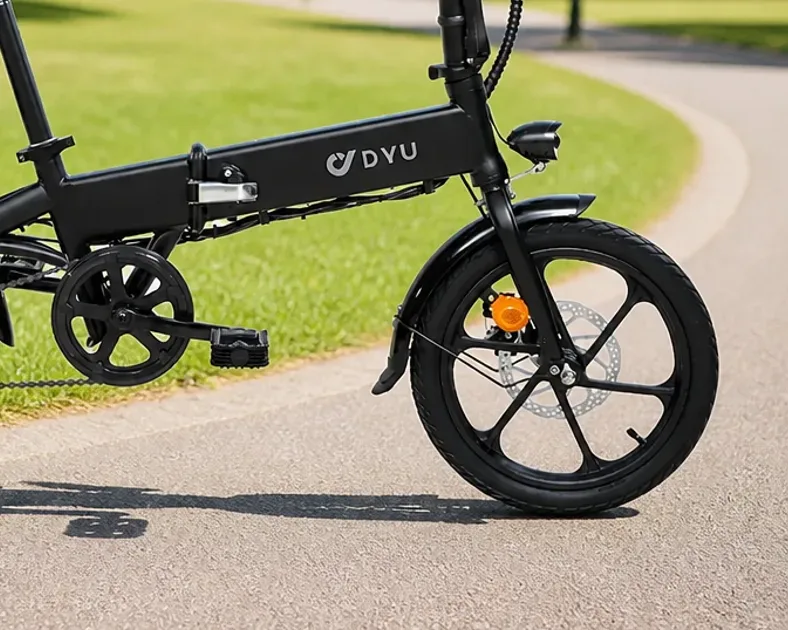
The DYU A1F Pro is a compact folding electric bike with a £589 price tag. It sits in the middle of the DYU range. Many UK riders ask if it is a sensible city commuter for 2026.
This review looks at what you get for that money. We weigh the motor, battery, folding design and UK road rules. No hype, just a straight answer on where the bike fits.
Who should buy the DYU A1F Pro?
The A1F suits short urban trips and mixed train or bus commutes. It folds small enough to carry into an office or flat. If your journey is under six miles each way, it makes sense.
It is not a long range tourer. The small wheels and basic suspension favour smooth tarmac. Buyers who want a simple folder for city streets will get the most value.
- Commuters who fold a bike at a station or office.
- Riders storing an e-bike in a small flat or car boot.
- Anyone who wants legal UK assistance without a licence.
Where it fits in the DYU range
The A1F Pro costs more than the budget DYU D3F at £339 but less than the bigger DYU T1. That puts it in the sweet spot for a better battery and tidy fold without a huge price jump.
At £589, you move past the very cheap folders. The extra money should show in range, build finish and pedal assist smoothness. We look at whether those gains are real.
Motor, battery and real world range
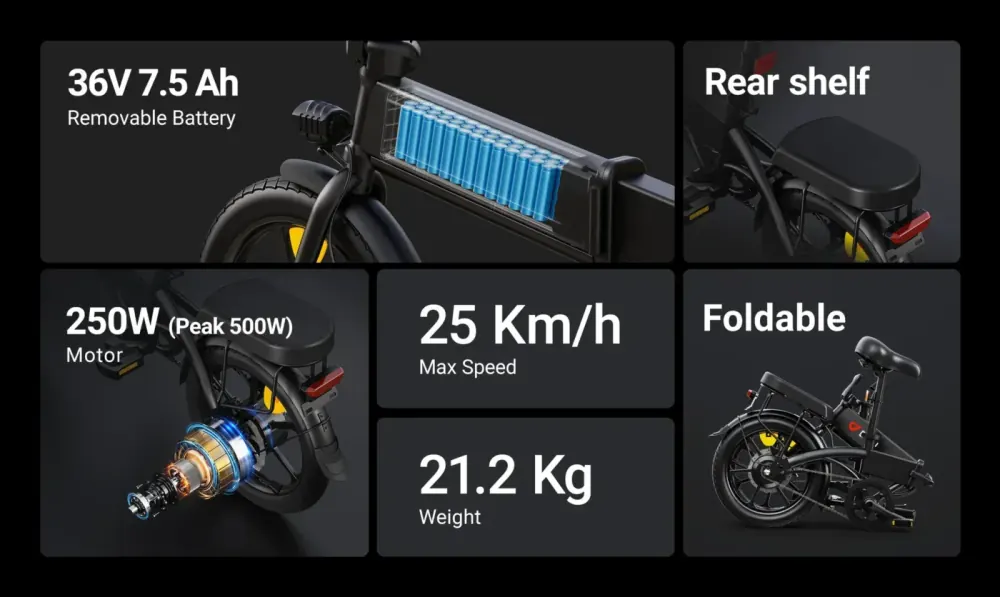
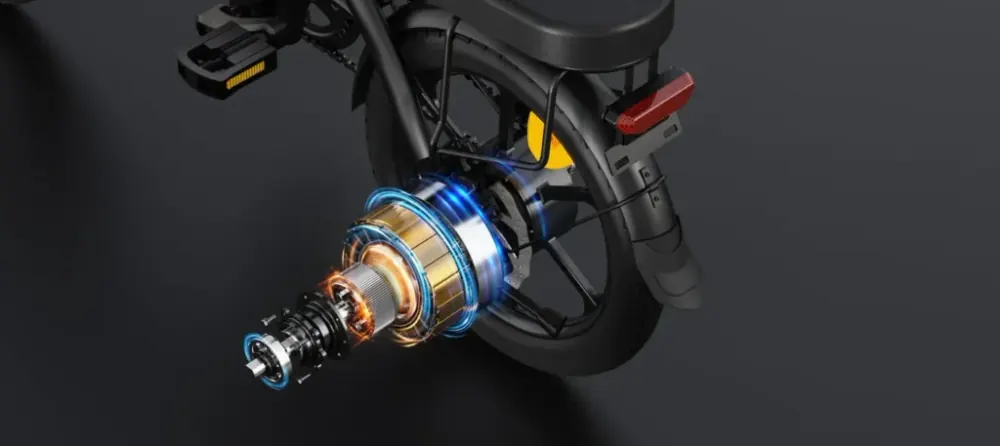
DYU lists the A1F Pro with a 250W rear hub motor. That is the maximum continuous power allowed for an electrically assisted pedal cycle in the UK. It gives a steady push from standing starts.
The battery is removable, so you can charge it indoors. DYU quotes a range of up to 25 miles. Expect less on hills, in cold weather and if you use full throttle often.
What the numbers mean for a commute
A 25 mile claim is measured in flat, warm conditions with light pedalling. A real UK ride with stop start traffic and a few hills may return 15 to 20 miles. That is still enough for most city trips.
The rear hub motor makes the bike feel more stable than front hub folders. Weight sits over the driven wheel, which helps grip on wet roads. You should recharge after each ride or every other ride.
Charging times and battery care
The removable battery takes the stress out of flats without a ground floor plug socket. Keep it warm in winter to protect range. Avoid storing a full battery in a hot car in summer.
A full charge usually takes four to six hours. You can top up at work without removing the battery if you carry the charger. Lithium cells last longest when kept between 20% and 80%.
UK e-bike law and safety
The DYU A1F Pro is sold as a 250W e-bike with assisted speed capped near 15.5 mph. Under UK EAPC rules, that means it counts as a normal bicycle. You do not need a licence, tax or MOT.
You must be 14 or older. The motor must only help while you pedal, unless the bike has a throttle that cuts out at 3.7 mph. Many folding models include a walk assist or low speed throttle for pulling away.
Cycling UK explains that a legal e-bike is still a bicycle, so you can use cycle lanes and shared paths. The 15.5 mph cutoff may feel slow on open roads, but it keeps you legal. Above that speed, you pedal under your own effort.
- 250W maximum motor output.
- Assistance cuts off at 15.5 mph.
- Riders must be 14 or over.
- No insurance or registration required.
Throttle and pedal assist behaviour
The A1F Pro has a throttle for low speed help. That is handy at junctions or when pushing up a ramp. Full UK legal throttles are limited to walking pace unless you pedal.
Check the exact mode before you ride. A bike that assists above 15.5 mph or powers without pedalling is not legal as an EAPC. The DYU is configured for UK roads.
Folding design and daily carry
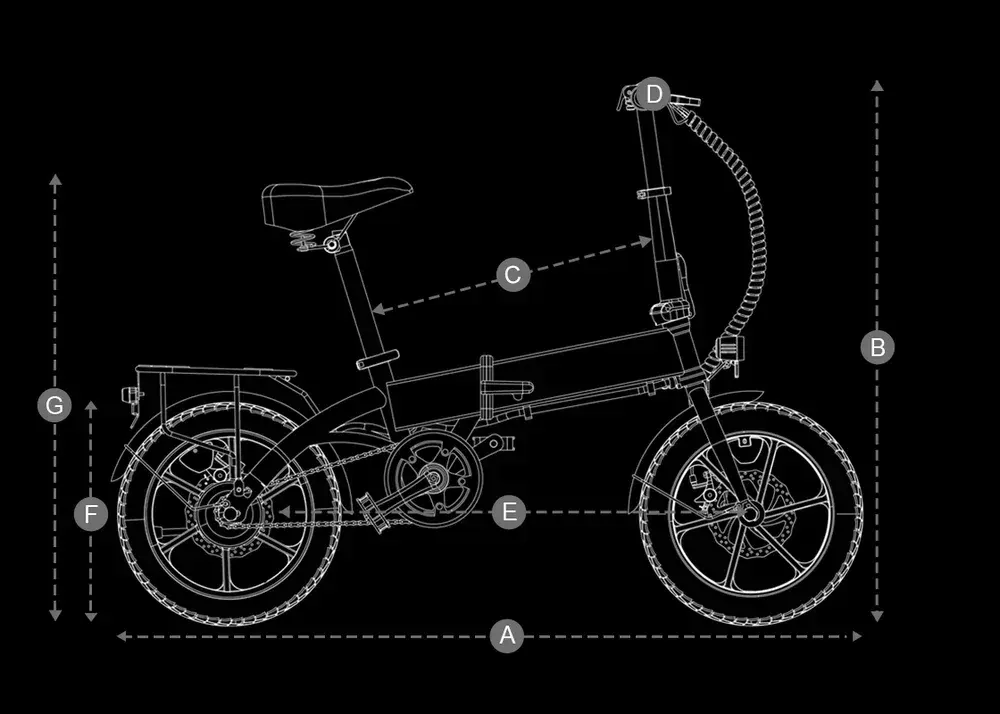
The A1F Pro folds at the frame and handlebar stem. The whole bike drops low enough to slide under a desk or into a train luggage rack. It weighs around 18 to 20 kg with the battery fitted.
That weight is normal for a folding e-bike. Carry it short distances, but do not expect to jog up stairs with it. The frame includes a magnetic catch to stop it unfolding mid carry.
Train, bus and car boot use
National Rail allows folded bikes on most services, though some operators ask for a cover. The A1F sits within the usual carry on size, but check your specific route. A folded e-bike can be heavy on a busy platform.
In a hatchback or estate, the A1F fits without removing the front wheel. Remove the battery before lifting to make it lighter. The pedals fold flat too, which stops snags.
Learning the fold sequence
The folding mechanism uses a simple hinge and clamp. Learn the order: fold pedals, lower seat, drop handlebar, then fold frame. Reversing it becomes second nature after a week.
Always double check the clamps before riding. A loose stem or frame hinge is dangerous. A quick wiggle test takes two seconds and protects you from a nasty fall.
Comfort and ride quality
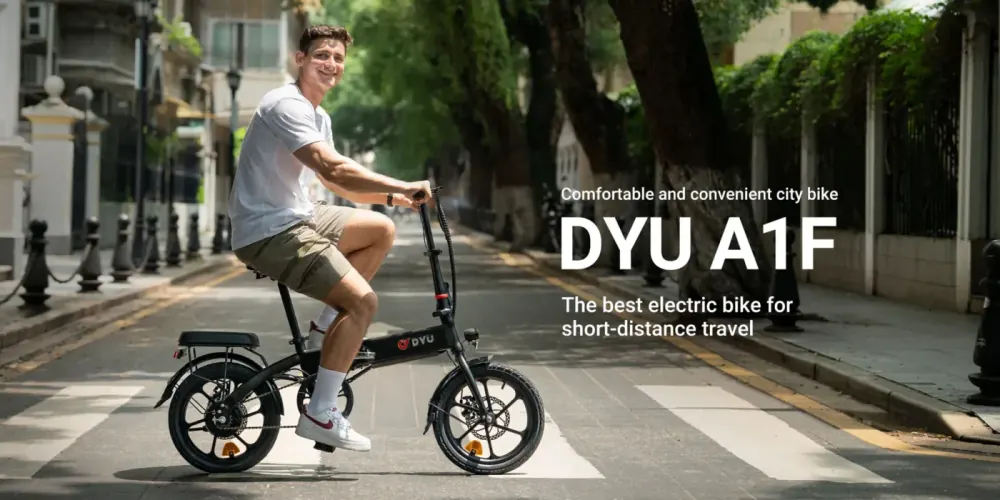
Small wheels and a rigid frame make city potholes feel sharper than on a full size bike. The A1F has a suspension front fork to take the edge off. A wider saddle and slightly raised bars help the riding position.
For smooth towpaths and streets, it feels stable at legal speeds. The 14 inch wheels turn quickly, so it is agile in traffic. You trade high speed composure for easy storage. Sustrans has good advice on finding quieter city routes.
Brakes and tyres
The A1F Pro uses mechanical disc brakes. They work in wet weather and need less rim cleaning than V brakes. Budget for new pads after heavy winter mileage, around every 500 to 800 miles.
The tyres are city pattern rather than knobbly off road. That keeps rolling resistance low and range healthy. If you ride canal paths, lower the pressure slightly for more grip.
Suspension and tyres on rough roads
The front suspension is basic, around 20 to 30 mm of travel. It softens cobbles but will not absorb big potholes. Stand up slightly over rough patches to save your wrists.
Wider tyres would add comfort, but would also add rolling drag. The A1F balances comfort and range for a city folder. If your route is very rough, a 20 inch folder like the DYU T1 rides better.
Running costs and maintenance
A folding e-bike is cheaper to run than a car or bus pass over time. Electricity for a full charge costs pennies. You still need to replace brake pads, tyres and occasionally a chain.
The battery is the biggest future cost. DYU batteries are replaceable, and proper storage extends life. Keep it between 20% and 80% where possible and charge at room temperature.
- Full charge costs roughly 5 to 8 pence.
- Brake pads from £10 to £20 per set.
- Replacement tyres from £15 each.
- A new battery, if ever needed, is around £150 to £250.
What to check before first ride
Fold and unfold the bike a few times at home. Tighten the stem and seat post clamps properly. Check the brake lever feel and tyre pressure before every commute.
Book a basic service after the first 100 miles. A shop can true the wheels and adjust the gears. Small folding bikes benefit from this early check because cables settle and stretch.
DYU A1F Pro alternatives at Biktron
If you want to spend less, the DYU D3F at £339 cuts the price but gives a smaller battery. The DYU T1 at £679 adds a larger 20 inch wheel and longer range feel.
For riders who do not need a folder, the city e-bike range has full size wheels. They ride better over rough roads but need more storage. The A1F remains the best compromise for small flats.
| Model | Best for | Price | Trade off |
|---|---|---|---|
| DYU D3F | Tight budgets | £339 | Shorter range |
| DYU A1F Pro | Daily folding commute | £589 | Small wheels |
| DYU T1 | Mixed paths | £679 | Heavier fold |
| Full size city bike | Comfort first | from £589 | No folding |
Final verdict on the DYU A1F Pro
The DYU A1F Pro earns its £589 price with a legal motor, removable battery and a genuinely useful fold. It is not a speed machine or a rough terrain bike. It is a practical city tool.
If your commute is short and storage is tight, this is one of the most sensible folders in the Biktron folding range. If you ride 20 miles a day, choose a bigger battery full size bike instead.
For more help, read our electric bike guides or browse all bikes. The right e-bike is the one that fits your route, your storage and your budget. The DYU A1F Pro is not trying to be an off road machine. It is a city folder that respects UK law and a small budget. That is exactly what many riders need.
Frequently asked questions
Is the DYU A1F Pro legal to ride in the UK?
Yes, it is sold as a 250W EAPC with assistance up to 15.5 mph. Riders must be 14 or over. No licence, tax or insurance is required.
How far does the DYU A1F Pro go on one charge?
DYU quotes up to 25 miles in ideal conditions. Real UK miles are usually 15 to 20, less in cold weather or on hills.
Can I take the DYU A1F Pro on a train?
Most train operators allow folded bikes, but some ask for a cover. Check the specific operator before you travel.
Is the battery removable?
Yes, the battery lifts out for charging indoors. That is useful if you live in a flat or keep the bike in a shed.
Is the DYU A1F Pro good for long commutes?
It suits short city trips best. For regular rides over 15 miles each way, a full size e-bike with a bigger battery is more comfortable.