Samebike 20LVXD30-II vs CY20: Which Mini Folder Wins?
A straight comparison of two popular Samebike folders. We look at portability, comfort, UK law and honest range to name the better everyday buy.

The line-up compared
| Model | Price | Motor | Range | Top speed | UK road status |
|---|---|---|---|---|---|
| Samebike 20LVXD30-II Folding Electric Mini Bike | £489.00 | 250W | 22 Miles | 15.5 Mph | Road legal |
| Samebike CY20 PRO Portable Commuter Electric Bike | £549.00 | 250W | 56 Miles | 15.5 Mph | Road legal |
| Samebike CY20 Portable Commuter Electric Bike | £469.00 | 250W | 56 Miles | 15.5 Mph | Road legal |
Two compact Samebike folders sit very close on paper, but they suit different riders. The Samebike 20LVXD30-II is the mini specialist, while the CY20 is the portable commuter most people end up keeping. Choosing the wrong one means a bike that fights your daily routine.
We compare them without hype. Prices are current in our shop, and we stick to what UK law and the manufacturer specs say. No first-ride claims, just the facts that matter for a UK buyer.
What the 20LVXD30-II gets right as a mini folder
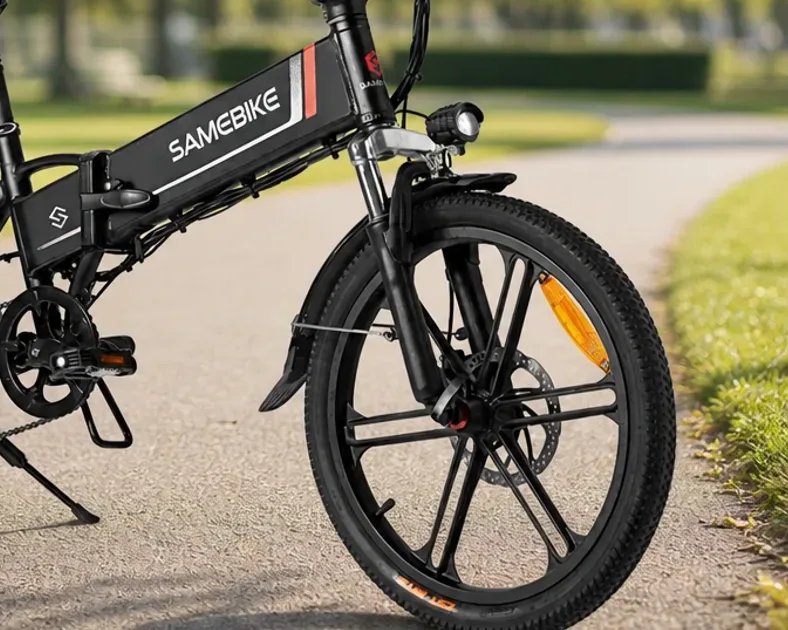
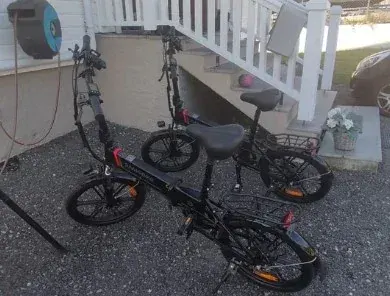
The 20LVXD30-II Folding Electric Mini Bike is built around one job, folding down small. That makes it easy to carry up stairs, store in a hallway cupboard, or slide under a desk. That single skill solves more storage problems than any other spec.
At £489 it undercuts the CY20 PRO by £60. Its lower seat and short wheelbase feel nimble in town traffic, although taller riders may find the cockpit a little compact. It feels quick and simple in city traffic.
The mini's small wheels accelerate quickly away from lights. They also make the folded package easier to lift, which matters if you carry the bike through a station every day. The small package also feels less intimidating to carry through a crowd.
Do not expect a plush ride on rough roads. The short wheelbase and small wheels are happiest on smooth tarmac and well-maintained cycle lanes. If your route includes cobbles or rough shared paths, the mini asks for more care.
Who should pick the 20LVXD30-II
Choose this bike if storage space is your biggest problem. It is also a good choice for short stop-start commutes, flat towns, and mixed train journeys where you need to carry the bike onto a platform.
- You live in a flat without a bike shed.
- Your commute is under four miles each way.
- You regularly fold and carry the bike on public transport.
- You want the lowest entry price without sacrificing the Samebike warranty.
What the CY20 range brings to a commute
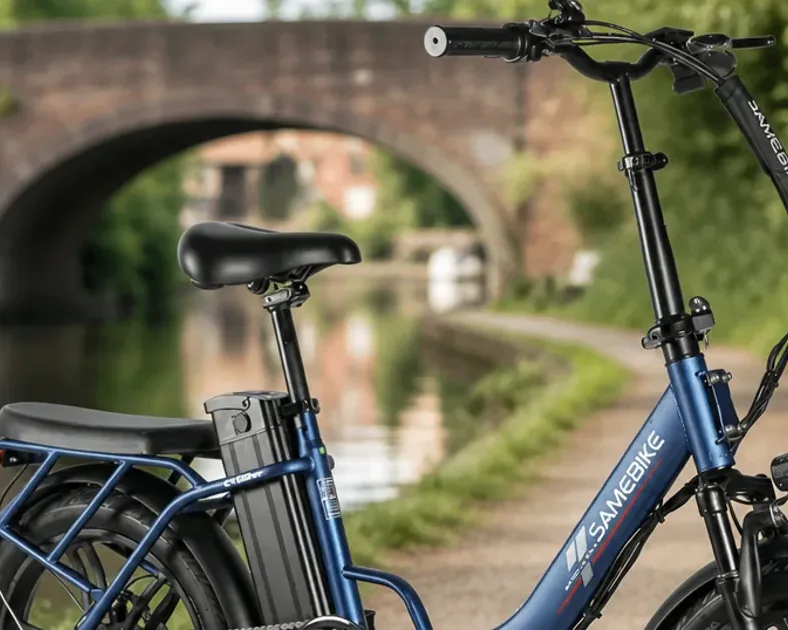
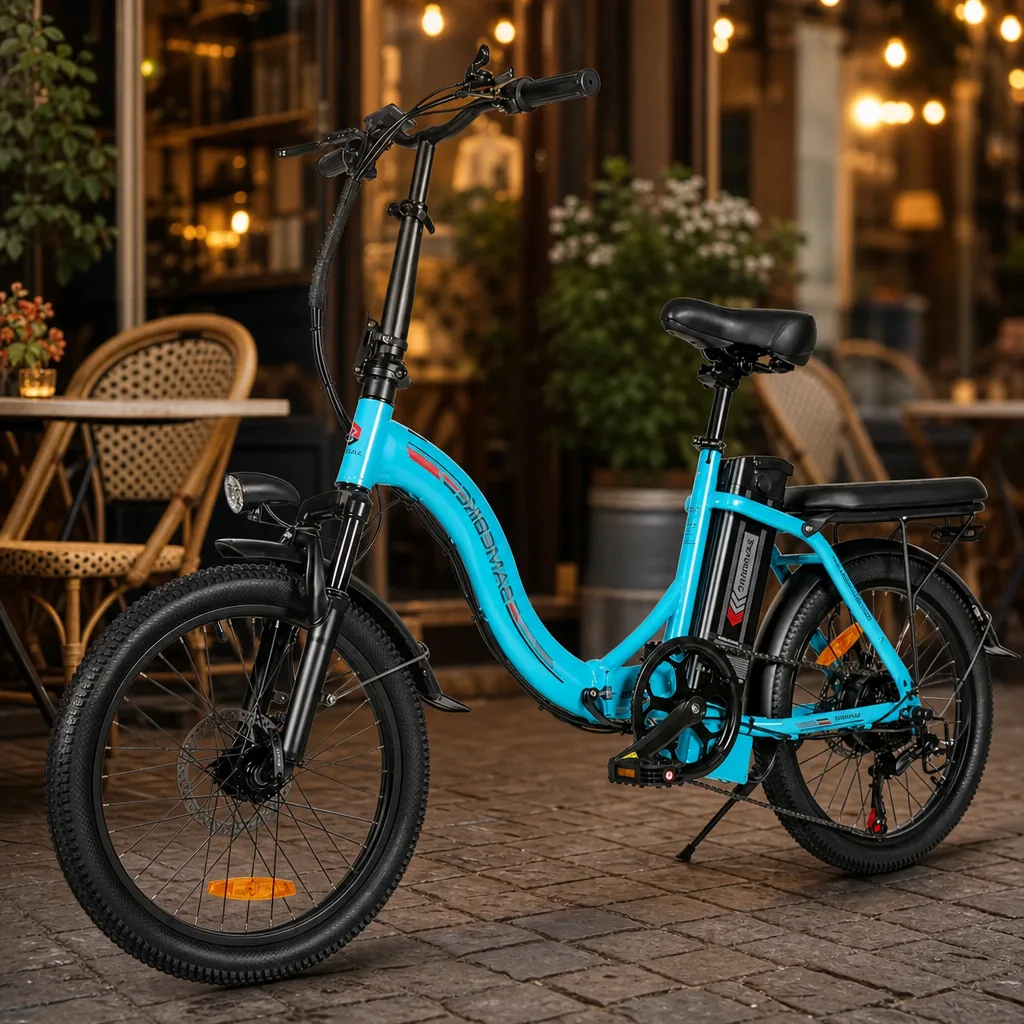
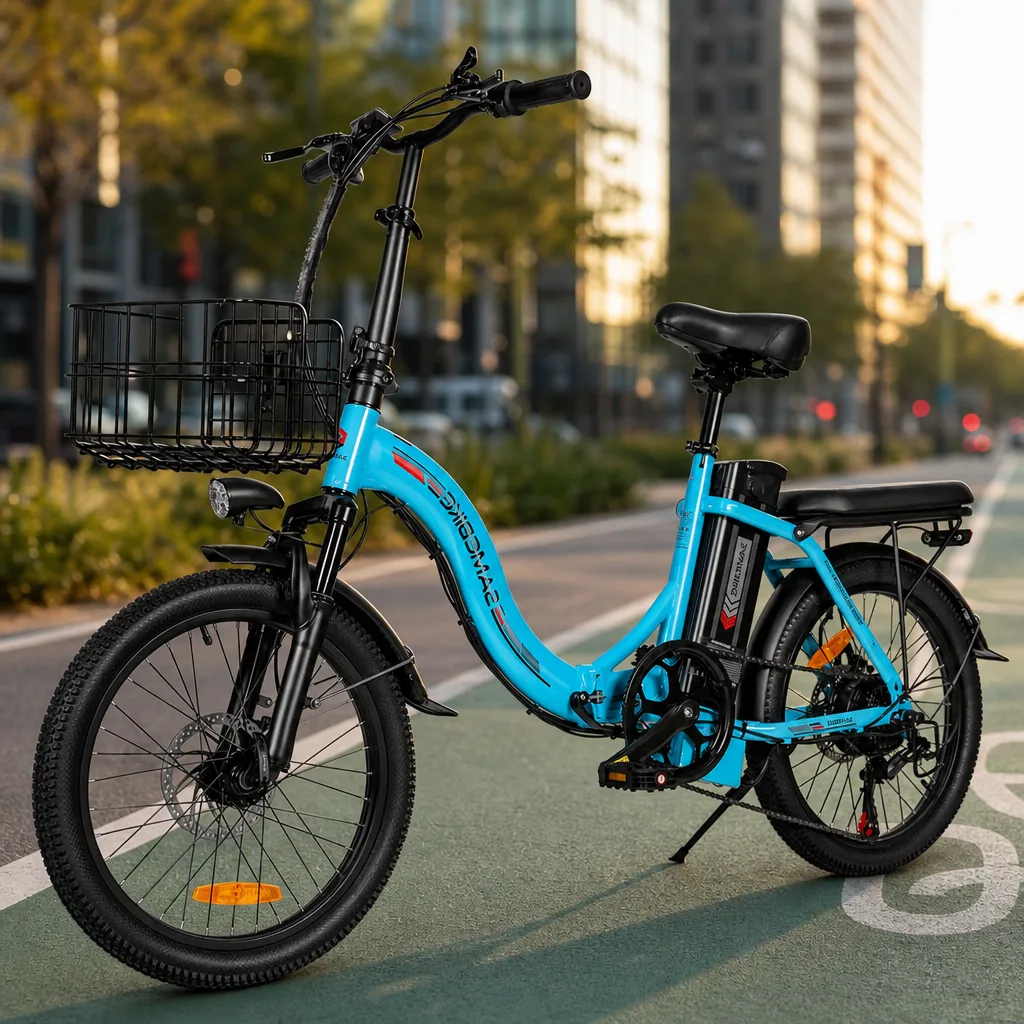
The CY20 PRO Portable Commuter Electric Bike and the cheaper CY20 Portable Commuter Electric Bike both use a larger frame than the mini. That usually means a more relaxed saddle-to-handlebar distance and a smoother ride on broken tarmac.
The £469 CY20 Portable actually undercuts the mini on price, while the £549 CY20 PRO adds more features for longer days. Both remain fully legal EAPCs with a 250W motor and 15.5 mph assist.
A longer wheelbase helps the CY20 feel stable at speed. The riding position is more upright than the mini, so your wrists and lower back take less strain on a forty-minute commute. That makes a real difference by the end of the week.
The CY20 range is not as compact when folded as the mini. It will still fit most car boots, but it is more of a folding commuter than a carry-everywhere folder. If you rarely fold the bike, that trade is easy to accept.
CY20 vs CY20 PRO in one sentence
Pick the standard CY20 Portable if you want the cheapest Samebike folder, and pick the CY20 PRO if you want the higher-spec commuter build.
UK law: both stay fully legal
Every bike mentioned here meets the UK's EAPC rules. The motor must be rated at 250W maximum, and electrical assistance must cut off at 15.5 mph. You can read the official guidance on GOV.UK's electric bike rules.
That means no licence, no tax disc, no MOT and no compulsory insurance. Riders must be 14 or over. The same limits apply to both folders, so neither gets a legal advantage.
For a plain-English breakdown, Cycling UK's e-bike guide confirms what counts as a legal pedelec in Britain. Riding a throttle-only bike over 15.5 mph without pedalling would not meet these rules.
Real range and battery honesty
Manufacturers quote range in ideal conditions. The electric bicycle industry usually tests on flat ground, with a light rider, in mild weather. Your real mileage will be lower.
Hills, cold mornings and a heavier rider can cut a quoted range by a third or more. Always look at the battery watt-hour figure in the live spec table above this article, then plan for the worst day, not the best.
Both bikes have similar motor power, so the battery capacity in the spec table matters most. A bigger battery adds weight, but it also means fewer charges during a busy week. Range anxiety disappears when you know your route's real demand.
Cold weather temporarily reduces lithium battery output. If you park outside all day, bring the battery indoors before your ride home to recover some of that lost range. A warm battery always performs closer to its quoted figure.
How to read the spec table
- Bigger battery capacity means more range, but also more weight.
- A 250W motor on both bikes gives similar hill performance.
- Smaller wheels accelerate quickly, but larger wheels roll over potholes better.
- Cold weather reduces lithium battery output, so charge indoors where possible.
Comfort on longer rides
The CY20 range is the better option if your journey lasts more than twenty minutes. Its larger frame spreads your weight more evenly and the saddle is usually wider, which helps on steady commutes. That support is easy to feel after the first few miles.
The 20LVXD30-II can manage longer trips, but riders over about five foot eight may feel cramped. Swapping the saddle for a wider one and adding ergonomic grips can make a real difference without spending much.
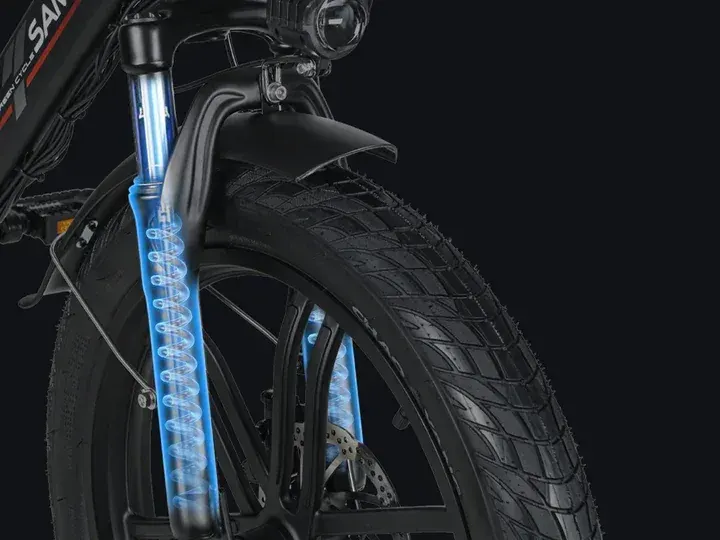
Both bikes have suspension in the saddle or fork, but neither is a full-suspension mountain bike. Treat potholes with respect and keep your knees slightly bent over rough patches. Your joints will thank you on day three.
If comfort is your priority, compare these folders with the city electric bikes range, where larger wheels and step-through frames are common.
Build quality and frame details
Samebike builds both models around an aluminium alloy folder with secure hinges. The hinges are the most important part of a folding bike, so check the locking clamps are tight before every ride. A loose hinge is a safety risk.
The CY20 PRO often adds a more robust rear rack and better mudguards than the standard CY20 Portable. The mini keeps things simple, which helps keep the price at £489. Simplicity also means fewer parts to go wrong.
Neither bike is designed for hard off-road use. The folding mechanisms can develop play if you regularly ride down kerbs or across rutted canal paths. Kerb-hopping is best left to full-size mountain bikes.
If you need a folding bike for gravel tracks, the LO26-II-FT-YD Folding Electric Bike has wider tyres and a more rugged build, though it costs more at £689.
Day to day: portability, storage and trains
The 20LVXD30-II folds into a smaller package than the CY20 range. If you need to fit a bike into a boot, a narrow cupboard or an office corner, the mini wins without argument. It is the reason the model exists.
The CY20 folds too, but it is a commuter first. It will still fit most car boots and train luggage areas, though you may need to remove the seatpost on crowded services. A quick-release seatpost makes that a ten-second job.
| Use case | 20LVXD30-II | CY20 Portable | CY20 PRO |
|---|---|---|---|
| Smallest folded size | Best | Good | Good |
| Longest comfortable ride | Good | Better | Best |
| Lowest price | £489 | £469 | £549 |
| Best for mixed train commute | Best | Good | Good |
Before you buy, check your local train operator's folding bike policy. Some allow any folded bike, while others ask for a cover bag on peak services. A cheap cover bag solves most arguments with guards.
Storage size is not just about folded dimensions. The mini weighs less in most builds, so lifting it onto a high shelf or into a car is easier than with the CY20. That matters if you park in a third-floor flat.
Which one should you actually buy?
For most UK commuters, the CY20 range wins on comfort and long-term usefulness. The standard CY20 Portable undercuts the mini by £20 and gives you a more relaxed ride. That makes it the sensible default choice.
The 20LVXD30-II is still the right choice if your storage space is genuinely tiny. If you regularly carry a bike into a small flat, the mini's smaller fold saves real stress every day. No other spec can replace that convenience.
Think about your weekly routine. If the bike lives in a hallway and only travels three miles to work, the mini is perfect. If you ride ten miles across town, the CY20 is worth the extra folded bulk. The answer comes from your route, not the showroom.
You can also look at the full folding electric bike range if neither feels quite right. There are step-through folders, fat-tyre folders and bigger-wheel options at different prices.
Our verdict in one paragraph
The CY20 wins for the average UK buyer because it balances price, ride comfort and everyday practicality better than the mini. The 20LVXD30-II remains a specialist ultra-portable folder, not a mistake, just a narrower tool.
Maintenance and spare parts
Both bikes use standard folding-bike parts, so brake pads, tyres and inner tubes are easy to find. Keep the battery charged between 20% and 80% when not riding for weeks, and store it indoors over winter. This simple habit extends battery life by years.
A few simple checks will keep either folder reliable. Learn to adjust the folding hinges, check the wheel nuts monthly and keep the chain lightly oiled in wet weather. Five minutes a week prevents most roadside failures.
- Check tyre pressure every week, small wheels lose air faster.
- Wipe the battery contacts clean after riding in rain.
- Fold and unfold the frame once a month to keep hinges free.
- Replace brake pads as soon as they feel soft or squeal.
If you want more help choosing, read our AAIRSK vs SAMEBIKE vs ENGWE comparison. It puts Samebike against two other budget brands and explains where each one wins.
Frequently asked questions
Are both bikes legal in the UK without a licence?
Yes. Both follow EAPC rules, with a 250W motor and 15.5 mph assist. You need no licence, tax or MOT, but you must be 14 or over.
Which one folds smaller?
The 20LVXD30-II folds smaller. The CY20 range folds, but it is larger and heavier, so it is less handy for carrying onto a train every day.
Does the CY20 really cost less than the 20LVXD30-II?
The standard CY20 Portable is £469, which is £20 cheaper than the 20LVXD30-II at £489. The CY20 PRO costs £549.
What real range can I expect?
Real range depends on hills, cold and rider weight. Expect to lose a third or more from the manufacturer's quoted figure. Check the battery watt-hour figure in the spec table.
Which bike is better for hills?
Both have a 250W motor, so hill performance is similar. The CY20's larger wheels and longer wheelbase may climb more steadily, but neither is a strong climber.