Electric Bike Weight Explained, How Heavy Is Too Heavy?
Worried about electric bike weight? Discover typical weights, how they affect riding, and how to choose the right e-bike for your needs. Explore lightweight and practical options at Biktron.

The line-up compared
| Model | Price | Motor | Range | Top speed | UK road status |
|---|---|---|---|---|---|
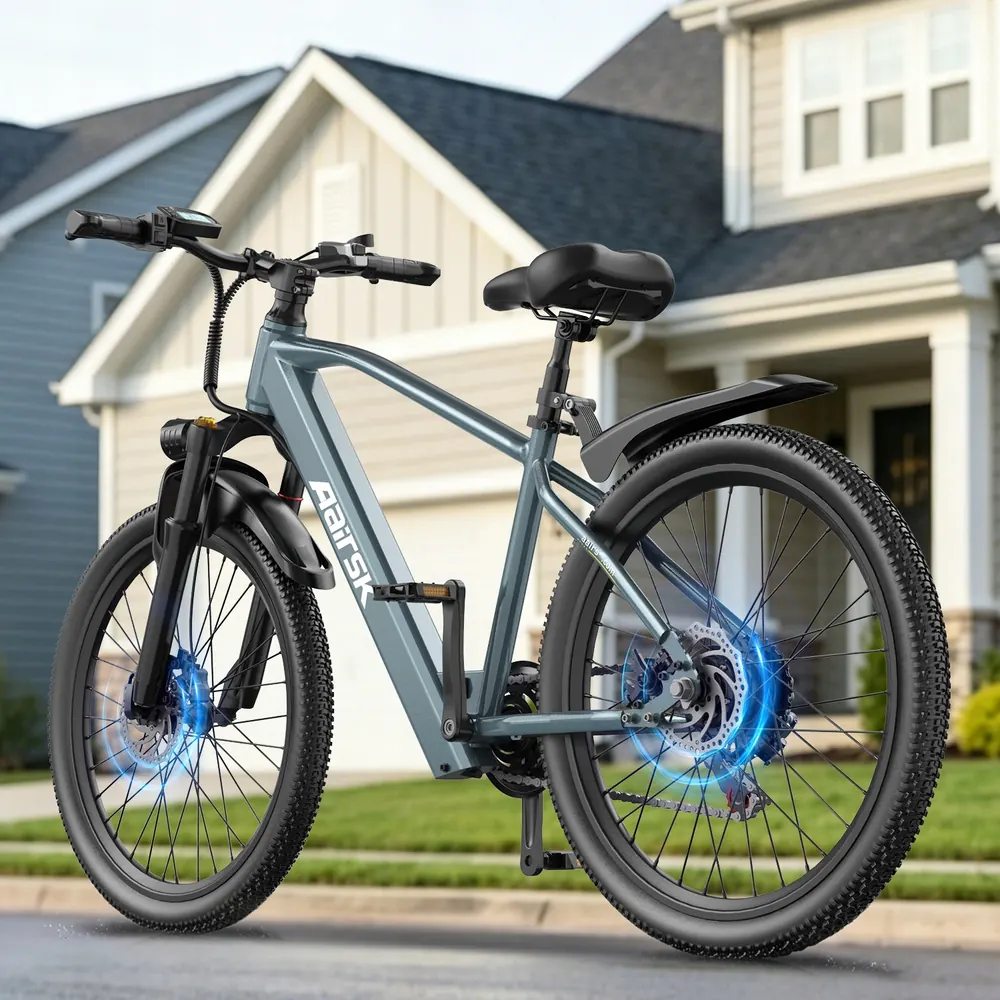
| AAIRSK GT300 Mountain Electric Bike | £499.00 | 250W | 28 Miles | 15.5 Mph | Road legal |
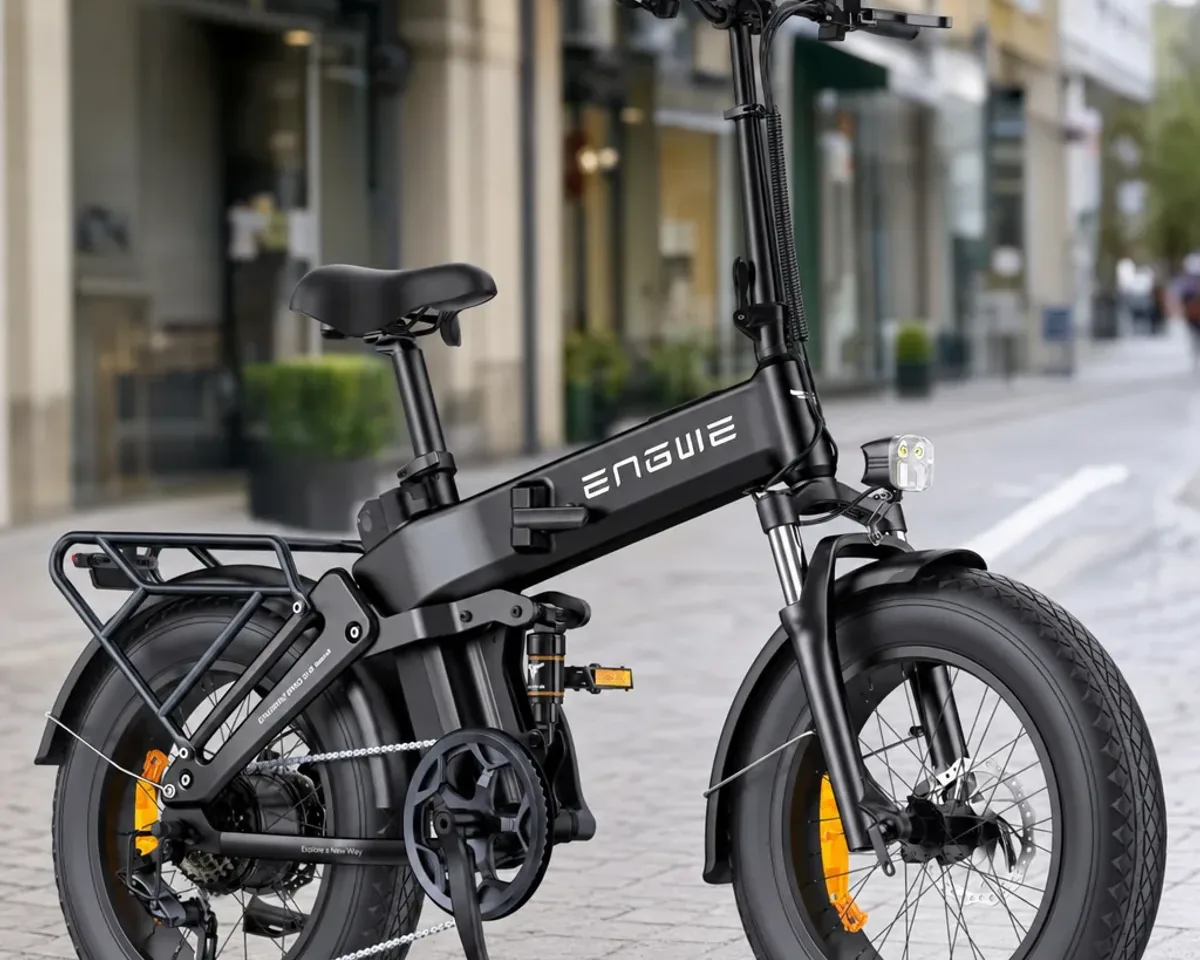
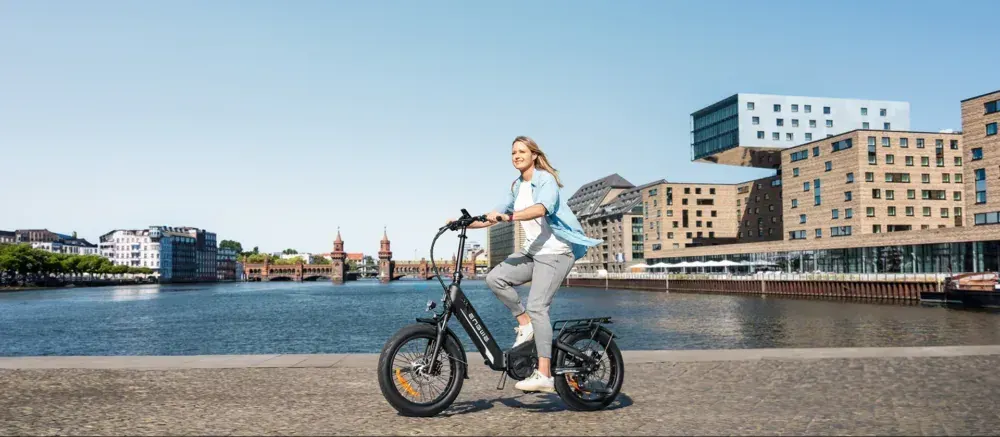
| Engwe L20 3.0 Pro Foldable Electric Bike | £1,369.00 | 250W | 87 Miles | 15.5 Mph | Road legal |
| Fafrees F20 Max Folding Electric Bike | £964.00 | 500W | 62 Miles | 15.5 Mph | Private land only |
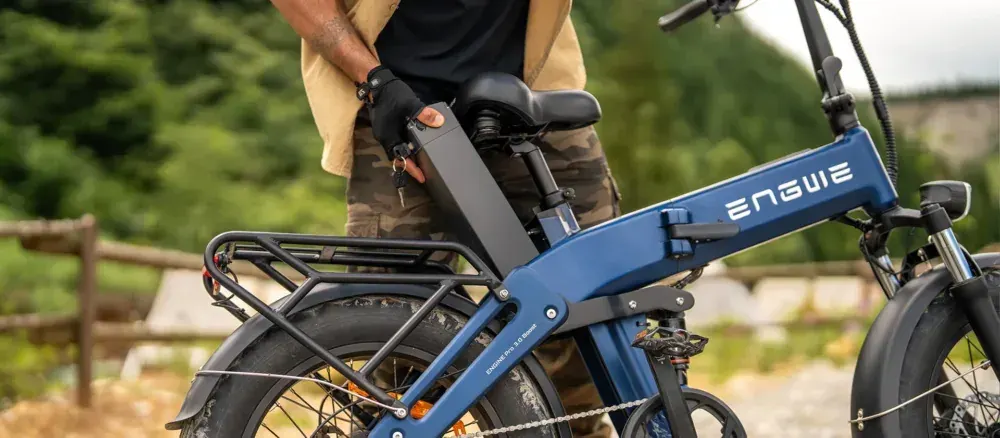
| Engwe Engine Pro 3.0 Boost Folding Electric Bike | £1,669.00 | 250W | 50 Miles | 15.5 Mph | Road legal |
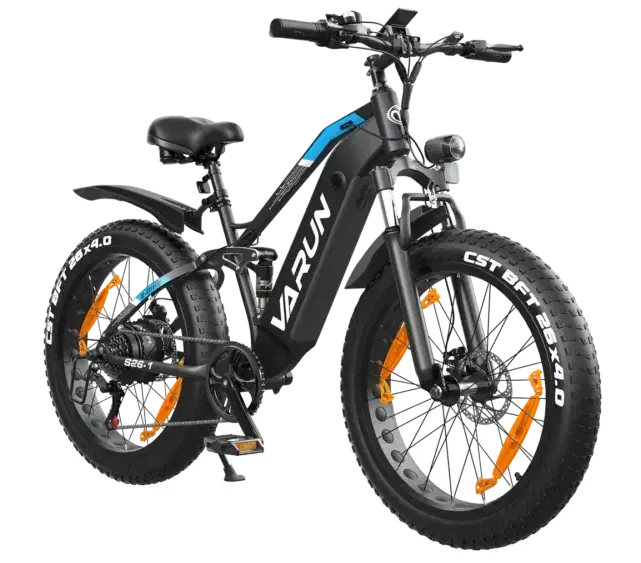
| Varun S26-1 Fat Tire Electric Bike | £949.00 | 750W | 50 Miles | 15.5 Mph | Private land only |
| Samebike 20LVXD30-II Folding Electric Mini Bike | £489.00 | 250W | 22 Miles | 15.5 Mph | Road legal |
| SAMEBIKE RS-A01 MEN1.0 Electric Mountain Bike | £589.00 | 500W | 56 Miles | 15.5 Mph | Private land only |
| AAIRSK GT900 Mountain Electric Bike | £599.00 | 250W | 43 Miles | 15.5 Mph | Road legal |
Electric bikes bring a world of freedom and fun, but weight becomes a big question the moment you need to lift one. Whether you store your bike in a flat, pop it on a train, or just push it up a hill, the number on the scales matters. This guide explains e-bike weight and helps you decide what is right for your life.
At Biktron, we see customers weighing up portability against power every day. You might love the idea of a rugged fat-tyre adventurer, but can you actually lug it up the stairs? We will break down the numbers, share real-world advice, and point you to bikes that strike the right balance, without any exaggerated claims.
Why Electric Bike Weight Matters
Weight influences nearly every aspect of owning an electric bike. A lighter bike feels nimble and is a breeze to handle off the power. A heavier one often feels more planted at speed and may pack a bigger battery, but it can be a chore to manoeuvre by hand. The right choice depends on your daily routine.
If you are a commuter who needs to carry a bike onto public transport, every kilogram counts. A folding e-bike at around 17 kg is a back-saver compared to a 30 kg cargo beast. Think about how you will store it, too. Carrying a heavy frame up a narrow staircase or lifting it onto a wall hook is no small task.
Riding Stability and Confidence
Heavier e-bikes feel reassuringly steady, especially at top speeds or on uneven road surfaces. The extra mass smooths out bumps and resists being tossed around by wind. Beginners often prefer this planted sensation, as it builds confidence quickly. A lightweight bike, on the other hand, feels more agile and responsive.
There is a trade-off. A very light e-bike can feel twitchy when you hit a pothole or pick up speed. Many riders find a happy medium around 20-25 kg. That weight gives you stability without turning the bike into an immovable object. It is a sweet spot for mixed urban and leisure riding.
What Makes an E-Bike Heavy?
The added weight comes from the very bits that give you that electric boost. A motor, a battery pack, a reinforced frame, and tougher components all pile on the kilograms. Understanding these elements lets you see why e-bikes are naturally heavier than standard push bikes and helps you prioritise features.
A typical non-electric hybrid bike weighs about 13 kg. Even a lightweight electric bike rarely falls below 15 kg. That is because the motor alone can add 3-4 kg, and the battery another 2-3 kg. Things add up fast, but every gram has a purpose.
Motor and Battery Weight
Hub motors built into a wheel tend to be heavier than mid-drive units, though many budget-friendly models use them. A rear hub motor typically adds about 4 kg. Mid-drive motors, found on premium e-bikes, sit lower in the frame and are slightly lighter, often around 3 kg. Both types shift your bike's centre of gravity.
The battery is the other heavyweight. A large 500 Wh battery can weigh over 3 kg. If you need long range, you will carry that weight permanently. Some e-bikes allow battery removal, which helps when lifting the frame up stairs but does not reduce the ride weight. When shopping, note both total bike weight and battery weight separately.
Frame and Components
E-bike frames must withstand the extra torque from the motor and the stress of a higher all-up weight. A sturdy aluminium or steel frame adds a kilo or two compared to a lightweight non-electric frame. Cheaper steel frames push the weight even higher. Carbon frames exist but are rare and costly.
Wider tyres, stronger wheels, beefy brakes, and suspension forks contribute, too. A fat-tyre e-bike with 4-inch tyres and a front suspension fork can tip the scales well over 30 kg. Even a city e-bike with a step-through frame and pannier rack picks up weight from all the utility extras. Every add-on counts.

Typical Weight Ranges for Different Styles
Your riding intention dictates the ballpark weight. Knowing these averages helps you set realistic expectations. There is a huge gap between a folding commuter and a long-range off-roader. We have broken down the most common e-bike categories with their typical weights so you can see where you fit.
Remember, these figures are all-in weights including the battery and any fixed accessories. Always check the manufacturer’s specifications for the exact ready-to-ride weight, as some brands quote weight without pedals. At Biktron, we list honest, real-world weights for every model we sell.
City and Folding E-Bikes
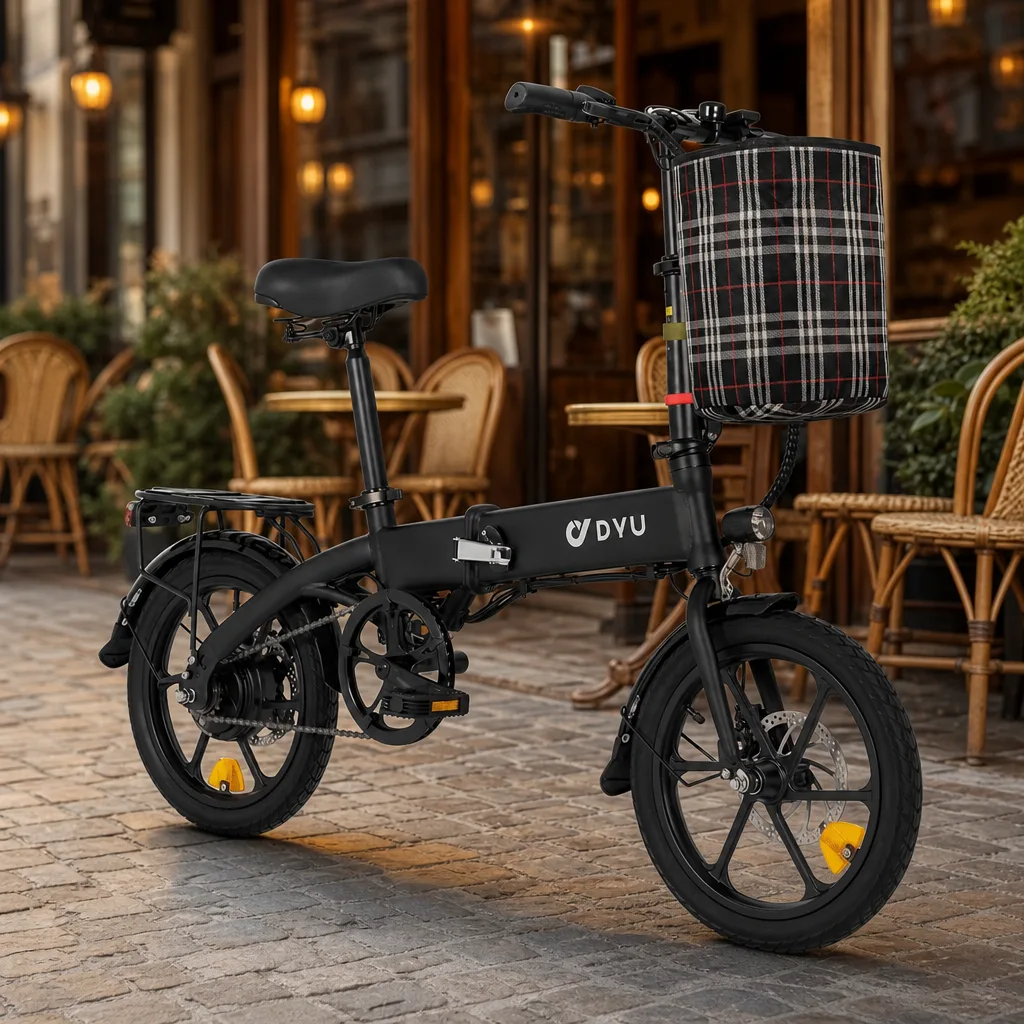
City e-bikes and folding e-bikes prioritise manoeuvrability and storage. A good folding electric bike can weigh as little as 16-19 kg. DYU A1F PRO Folding Electric Bike is a fantastic example at the lighter end of the scale. These bikes often use smaller wheels and simpler frames to save weight.
A step-through city e-bike, designed for comfort and utility, typically weighs 22-26 kg. Bikes like the DYU C6 City Electric Bike add useful features like mudguards, lights, and a rear rack without becoming overly heavy. This makes them perfect for riding to work or the shops, then lifting up a few garden steps.
Mountain and Fat-Tyre E-Bikes
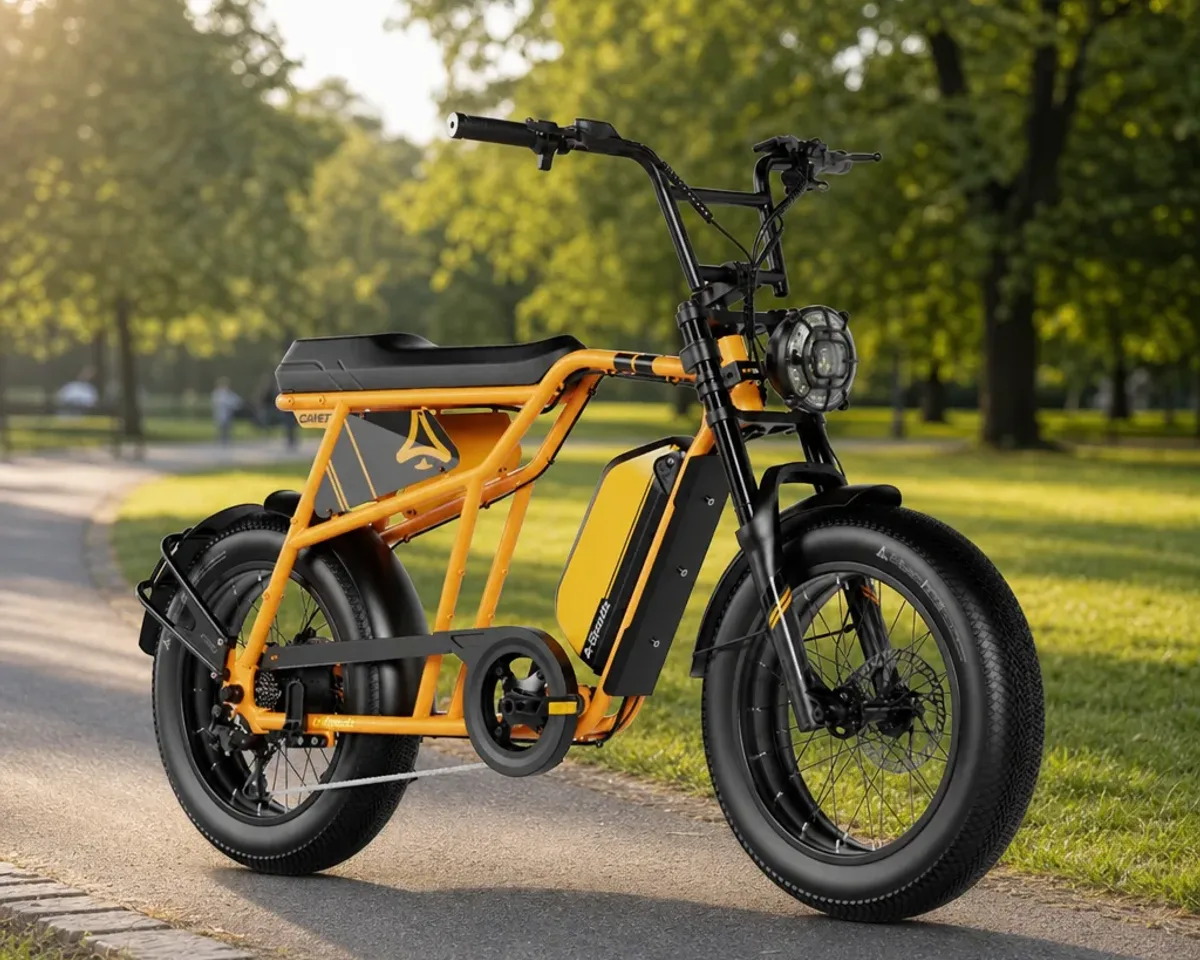
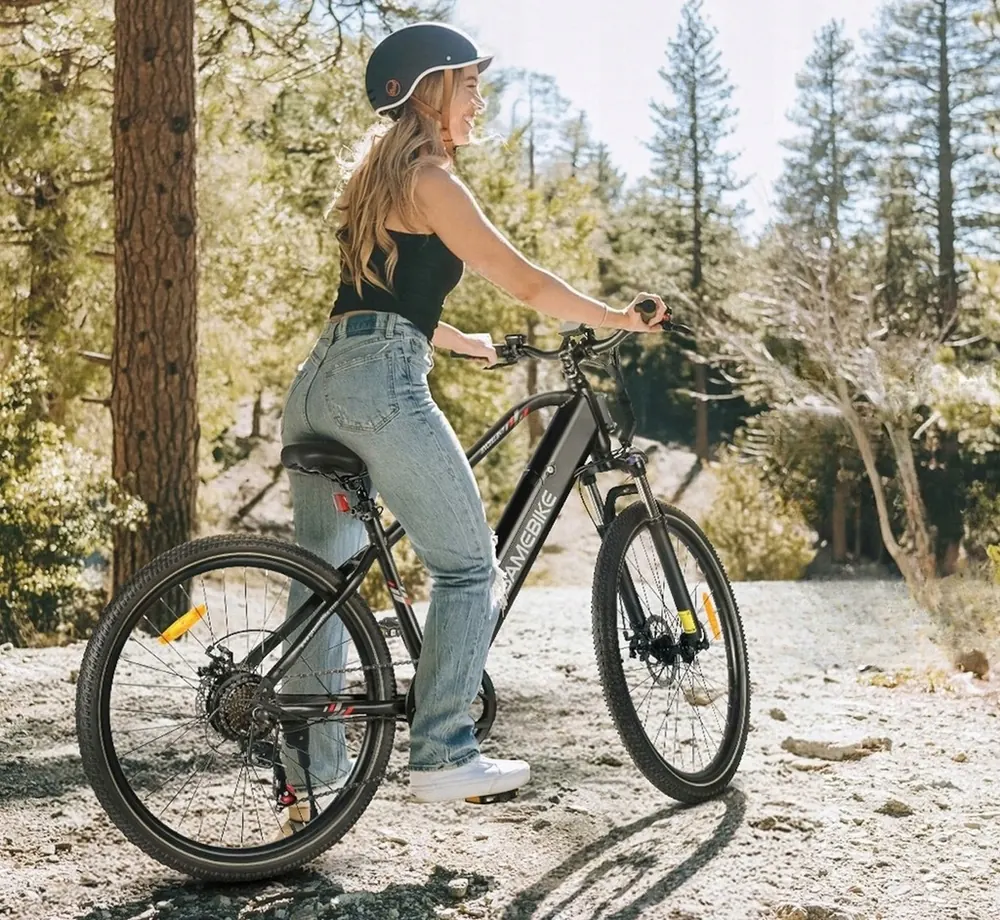
Electric mountain bikes (e-MTBs) are heavier due to robust suspension, knobbly tyres, and powerful motors. Expect weights between 24 and 28 kg. These bikes, like the AAIRSK GT900 Mountain Electric Bike, are built to take a beating on trails. The muscle comes from chunky frame construction and full-size wheels.
Fat-tyre electric bikes, with tyres as wide as 4 inches, tip the scales from 28 to 35 kg or more. Their monster truck appearance demands a heavyweight build to handle soft ground like sand or snow. While incredible fun, they are the hardest to pedal without assist and a real workout to carry. Only choose one if you never need to lift it.
Cargo E-Bikes
Cargo electric bikes are the strongmen of the e-bike world, with weights often exceeding 35 kg. They are designed to haul children, shopping, or heavy loads, so the weight is a necessary trade. The long wheelbase, sturdy racks, and powerful motor mean you sacrifice all portability for pure carrying capacity.
If you need a car replacement for school runs or business deliveries, a cargo bike is a brilliant solution. Just be sure you have ground-floor storage or a very accessible shed. Lifting a 40 kg cargo bike is not something you want to do twice a day.
How Weight Affects Performance and Range
Weight changes the numbers you care about, like how far you can travel on a charge. A heavier e-bike demands more energy to accelerate and to maintain speed, especially up hills. That directly eats into your battery range. Even with motor assist, you will feel the difference when that battery runs flat.
It is not just about distance. A heavier bike takes longer to stop and can feel more sluggish in stop-start traffic. The motor will work harder, which can affect long-term durability. But as long as you stay within the motor’s design parameters, e-bikes are engineered to handle their own mass.
Battery Range and Weight
As a rule of thumb, for every extra 5 kg of bike weight, you might lose 3-5% of your range under identical conditions. This is not a drastic amount, but combined with rider weight and terrain, it adds up. A heavier rider on a heavy bike will see the biggest impact on range. Check our in-depth guides for more range tips.
Manufacturers often compensate by fitting bigger batteries to heavier models. So a 30 kg fat bike may have a 700 Wh battery, giving it similar real-world range to a 22 kg city bike with a 500 Wh pack. Pay less attention to the advertised “up to” mileage and more to the battery capacity in watt-hours. That is the true fuel tank size.
Handling and Braking
Weight alters how a bike corners, accelerates, and brakes. A heavy e-bike carries more momentum, so you need to brake earlier and with more force. Good disc brakes are essential on any e-bike over 25 kg. A lightweight e-bike feels more flickable and is easier to dodge potholes with quick steering inputs.
If you are new to cycling, a moderately heavy bike actually helps because it dampens your steering mistakes. You can ride in a straighter line with less wobble. But at low speeds, that same weight can make balancing trickier. The key is to test ride if you can, or read reviews that describe the handling character.
UK Law and Electric Bike Weight
There is no legal weight limit for an electric bike in the UK, as long as it meets the Electrically Assisted Pedal Cycle (EAPC) rules. The bike must have pedals, display its power rating or manufacturer, and not exceed a motor power of 250W. The motor must cut out at 15.5 mph. Read the full requirements on GOV.UK.
Weight does not affect the legal status, meaning a 32 kg cargo e-bike is still a bicycle if it follows those rules. You do not need a licence, insurance, or helmet (though a helmet is strongly advised). What weight does influence is your ability to comply with one practical rule: you must be able to control the bike at all times.
Even though the law does not limit weight, very heavy bikes could become unwieldy in an emergency. Always ensure you can comfortably mount, dismount, and push the bike. For more safety guidance, the Royal Society for the Prevention of Accidents offers useful tips on bike handling.

How to Choose the Right Weight for Your Needs
Start with an honest look at your daily route and storage situation. If you must navigate stairs, aim for a folding electric bike under 20 kg. Our folding bike collection showcases models that are genuinely portable. Nobody wants to wrestle 25 kg up a flight of stairs every morning.
For riders with a garage, shed, or ground-floor access, weight becomes far less critical. You can happily choose a heavier, more feature-packed bike and enjoy the extra comfort and range. The decision often boils down to where the bike will live when not in use.
Commuting and City Riding
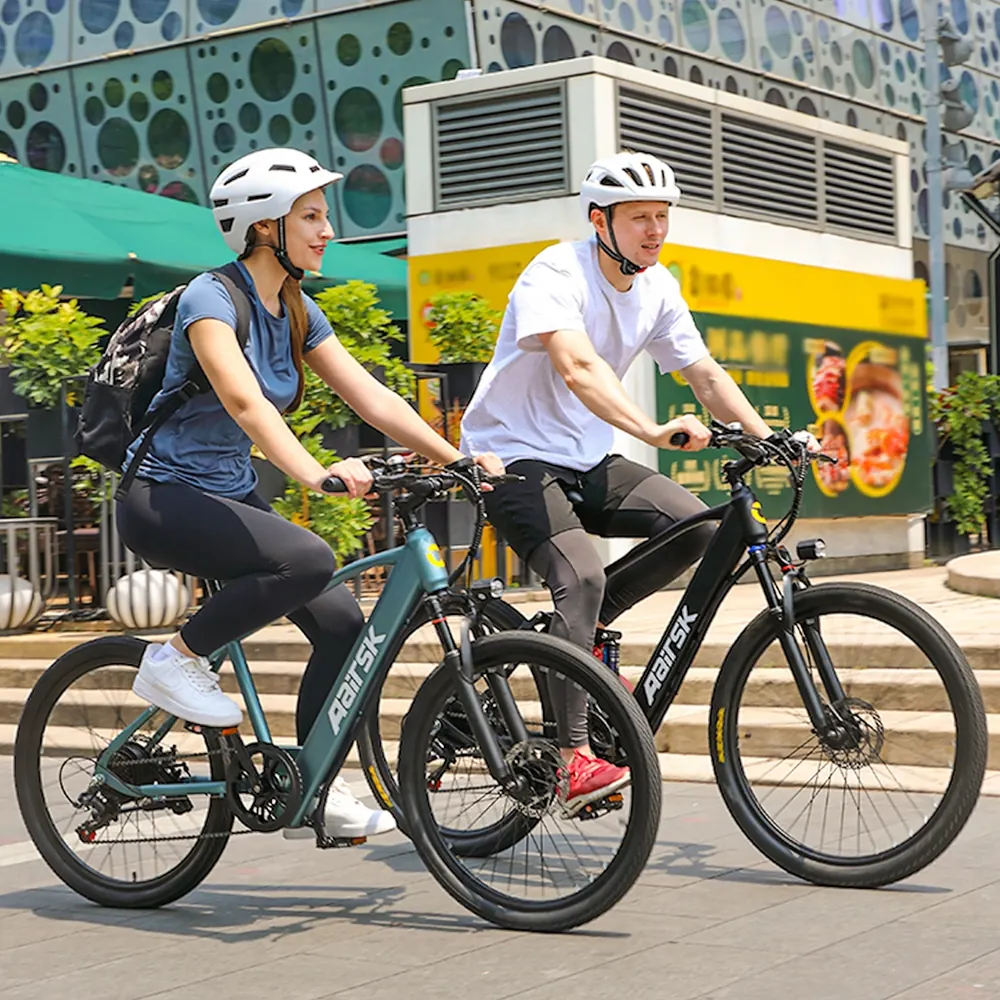
A city commuter needs a balance of durability and manageable weight. Aim for 20-24 kg, which gives you enough battery for daily distances and the strength to handle potholed streets. Bikes like the AAIRSK SU7 City Electric Bike hit that sweet spot. They are light enough to lift over a step but heavy enough to feel secure on the road.
If you combine your e-bike with a train journey, weight matters even more. Some stations have long staircases or narrow lifts. A heavy bike can make you late if you struggle. Test-lifting a bike before you buy is ideal, but when ordering online, check the weight and the presence of a walk-assist mode to help you push.
Off-Road Adventures
Off-road riders profit from weight to a point. A heavier bike keeps the wheels glued to loose ground and provides better traction. But lift it over a gate or push through a muddy section, and you will curse every kilogram. A 25 kg mountain e-bike like the GT900 is a good compromise for true trail riding.
Serious downhill or long backcountry trips may demand even heavier builds with dual battery options. Just be realistic about your fitness level for the manual bits. Even with a throttle or walk-assist, dragging a heavy bike up a steep bank is hard work. Choose a model that matches the toughest part of your ride.
Storing in a Flat or Carrying Up Stairs
If you live in a flat without a lift, weight must be your top priority. Look for e-bikes under 18 kg with a removable battery. Removing the battery knocks off 2-3 kg for the carry. A compact folded size helps, too, because you can tuck it just inside your doorway without blocking the hall.
Many folding e-bikes weigh around 17-19 kg. That is still heavier than a non-electric folder, but manageable with two hands. If you struggle with heavy lifting, consider an ultra-lightweight model or talk to us about the lightest options we stock. Our team is always happy to give real-world advice on lifting and carrying any model.
Lightweight vs Heavyweight E-Bikes: Pros and Cons
To boil it down, here are the key trade-offs between lightweight and heavyweight electric bikes. Both have their place, and the right one for you depends entirely on your lifestyle. Use this list as a quick checklist when you are comparing models.
- Lightweight e-bikes (under 20 kg): Easy to carry and store, nimble handling, shorter battery range typically, less stable at high speed, often higher price for less weight.
- Mid-weight e-bikes (20-27 kg): Good balance of stability and portability, solid range, suitable for most commutes and leisure rides, comfortable ride quality.
- Heavyweight e-bikes (over 27 kg): Maximum stability and comfort, big batteries, can handle rough terrain and heavy loads, difficult to lift or transport, lower range per kg of battery.
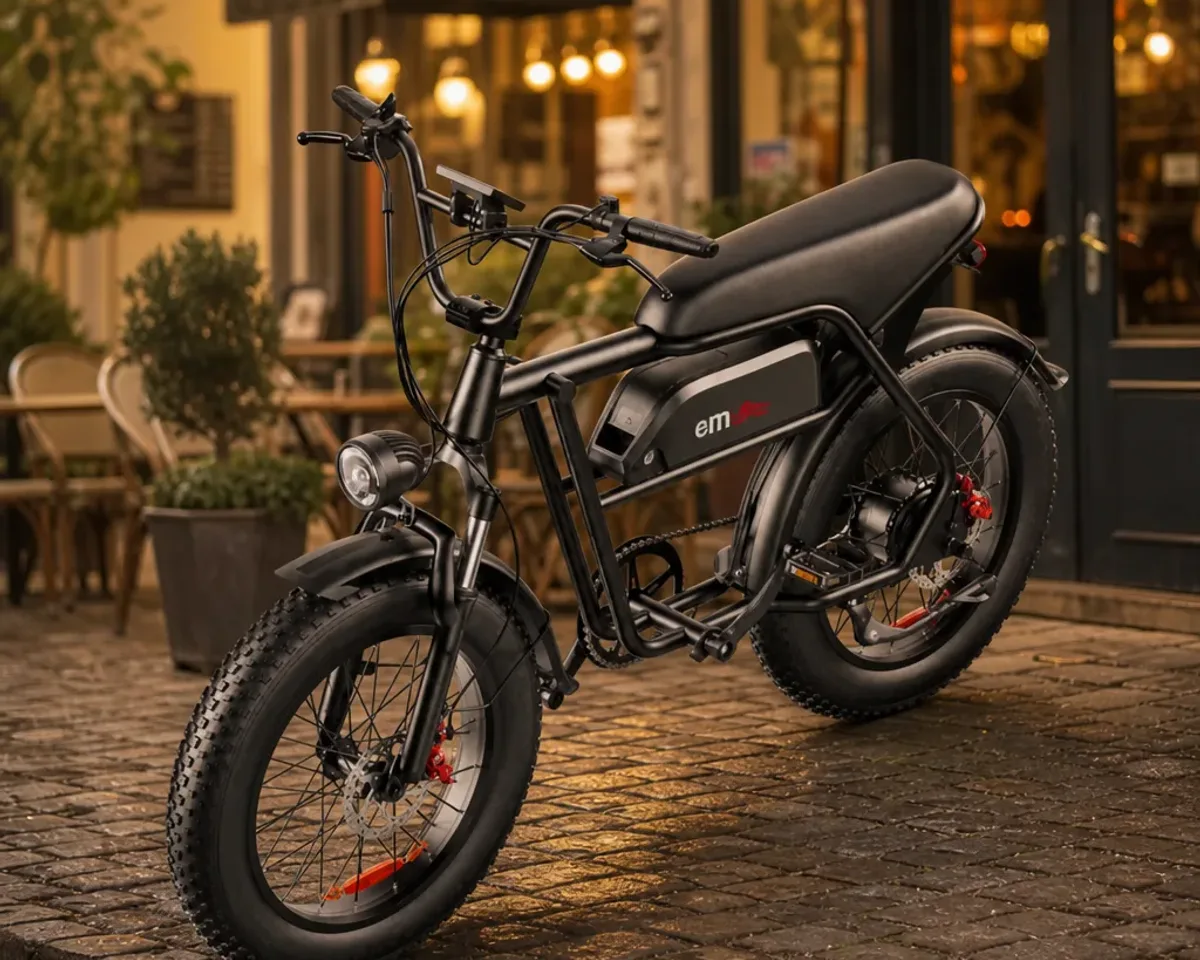
Many riders find the middle category serves them best. You get the assist you need without feeling like you are piloting a tank. But if you never need to lift your bike, do not fear a heavier model. The EMOKO C93 All-Terrain Electric Bike shows how a robust build opens up new adventures.
Our Picks at Biktron
At Biktron, we hand-pick e-bikes that deliver excellent value across different weight classes. Whether you need an ultra-portable folder or a go-anywhere fat bike, we have a well-sorted model. Here are three highlights that show the weight range we cover.
For the lightest daily ride, the DYU A1F PRO impresses at just 17.5 kg. Its compact fold and clever design make it a top choice for mixed commutes. If you want a versatile city bike, the DYU C6 offers a smooth ride and practical weight of 23 kg, with a large battery for longer trips.
When the trail calls, the AAIRSK GT900 at around 25 kg brings true mountain bike capability without becoming unmanageable. It is a brilliant entry to off-road e-biking. For those who need serious hauling power, our cargo bike range provides heavyweight options designed for family life or business use.
Tips for Handling a Heavy E-Bike
Even if you choose a heavier bike, a few techniques make life easier. Getting to grips with the walk-assist mode is step one. Almost all e-bikes have a button that drives the motor at walking pace, so the bike rolls itself up ramps or along station platforms. Use it to save your back.
When you must lift, remove the battery first. It is the heaviest single component. Many batteries slide off with a simple key turn. That instantly makes the frame feel 3 kg lighter. Also, take off any panniers or child seats before lifting. Every little helps when you are heaving a bike onto a car rack.
Lifting and Carrying Technique
Bend your knees, not your back. Stand close to the frame and grasp it at the low centre point, often where the seat tube meets the bottom bracket. Lift smoothly, keeping the bike close to your body. Do not try to lift with the handlebars and saddle, as this gives less control. For stairs, tilt the bike slightly and walk it up step by step if you cannot carry it.
For car transport, invest in a ramp or a tilting bike rack. A heavy e-bike is hard to lift above waist height. A lightweight towbar-mounted rack with a ramp is a game-changer. You can simply push the bike up rather than dead-lifting it. It is a small extra cost that protects your spine and paintwork.
Parking and Storage Solutions
At home, a sturdy floor stand or a wall-mounted shed hook rated for heavy weights keeps the bike safe and out of the way. Never rely on a cheap hook. Make sure the fixings go into solid brick or a structural stud. If you park in a communal area, look for secured bike stores or use at least one heavy-duty D-lock, as lightweight cables are easy to cut.
If you need to park on the street, consider a bike cover that disguises the e-bike. The more it looks like a regular bicycle, the less interest it attracts. Weight can be a deterrent here, as a heavy locked bike is harder to steal. But always lock through the frame and remove the battery and display if possible.
Frequently asked questions
What is the average weight of an electric bike?
The average electric bike weighs between 20 and 26 kg. Lightweight folding models can be as light as 16 kg, while cargo and fat-tyre bikes often exceed 30 kg.
Does electric bike weight affect battery range?
Yes, a heavier bike requires more energy to move, which can reduce range by 3-5% for every extra 5 kg. However, many heavy e-bikes have larger batteries to compensate.
Are there lightweight electric bikes under 20 kg?
Yes, several folding and city e-bikes weigh under 20 kg. For example, the DYU A1F PRO weighs just 17.5 kg. Removing the battery can make the frame even lighter to carry.
Can I ride a heavy electric bike up steep hills?
Absolutely. Heavier e-bikes often have powerful motors that handle hills well. The motor assists based on your pedalling, so even a 30 kg bike can climb steep inclines with ease.
Is there a legal weight limit for electric bikes in the UK?
No, UK law does not set a maximum weight for electrically assisted pedal cycles. As long as the bike meets EAPC rules (250W motor, 15.5 mph assist limit), its weight is not regulated.