FAFREES 26 Hailong One Review, Electric Mountain Bike
We put the FAFREES 26 Hailong One electric mountain bike through its paces. Read the published figures with real-world range, hill performance, and honest verdict.

The line-up compared
| Model | Price | Motor | Range | Top speed | UK road status |
|---|---|---|---|---|---|
| Fafrees 26 Hailong One Electric Mountain Bike | £654.00 | 250W | 28 Miles | 15.5 Mph | Road legal |
| Fafrees F28 MT Electric Mountain Bike | £824.00 | 250W | 34 Miles | 15.5 Mph | Road legal |
| Fafrees F20 Max Folding Electric Bike | £964.00 | 500W | 62 Miles | 15.5 Mph | Private land only |
| Fafrees F20 Foldable Electric Bike | £794.00 | 250W | N/A | 15.5 Mph | Road legal |
| Fafrees FF20 Polar Fat Tire Folding Electric Bike | £1,164.00 | 500W | 59 Miles | 15.5 Mph | Private land only |
| FAFREES F1 Road Electric Bike | £699.00 | 250W | 56 Miles | 15.5 Mph | Road legal |
| Fafrees F26 Pro Electric City Bike | £754.00 | 250W | 37 Miles | 15.5 Mph | Road legal |
| FAFREES 700C City Electric Bike | £849.00 | 250W | 62 Miles | 15.5 Mph | Road legal |
The FAFREES 26 Hailong One is an affordable electric mountain bike that promises proper off-road fun without breaking the bank. Priced well under £1,000, it aims to bring trail-ready performance to everyday UK riders. At that price, the published specification suggests an entry-level e-MTB for city streets, bridleways, and hills.
This review covers everything a UK buyer needs to know. You will find honest thoughts on power, battery life, comfort, and what it is like to ride. We also check it against EAPC rules so you can ride legally on roads and shared paths.
What Is the FAFREES 26 Hailong One?
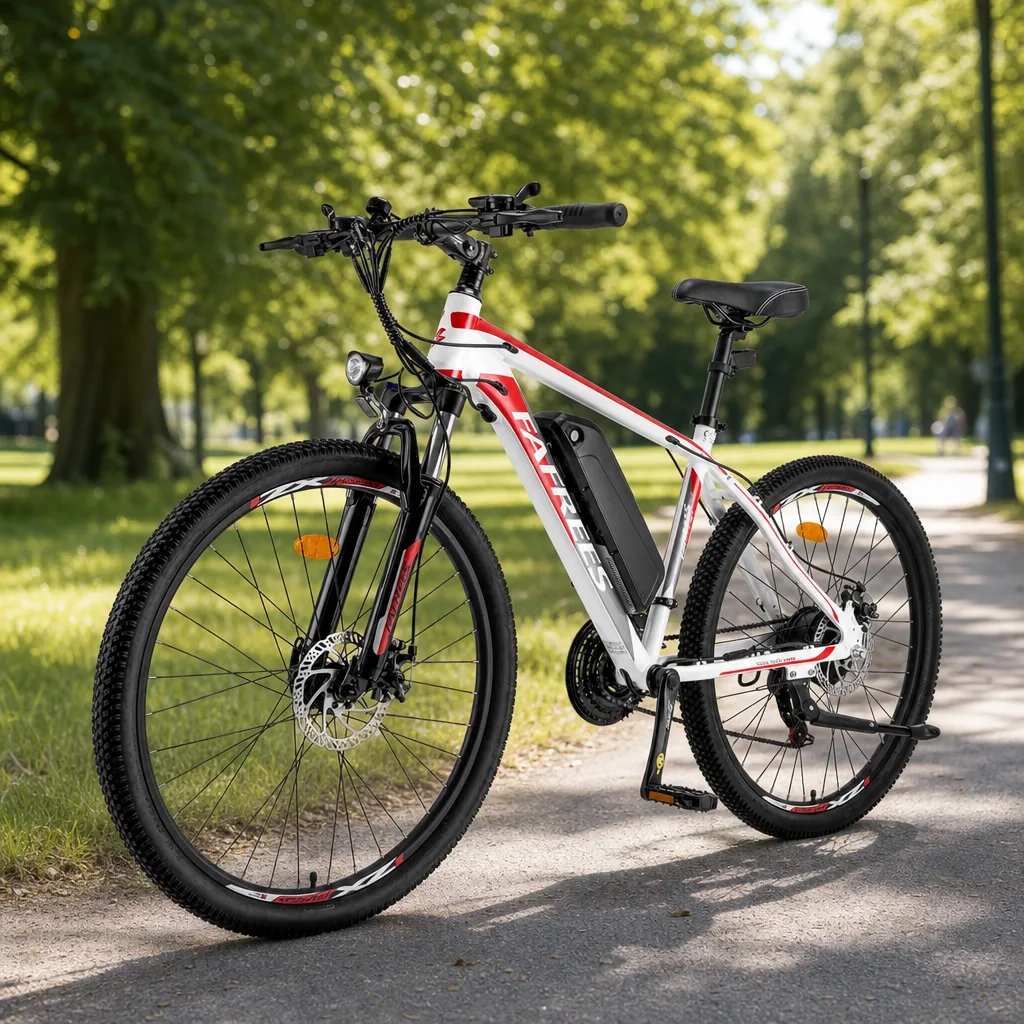
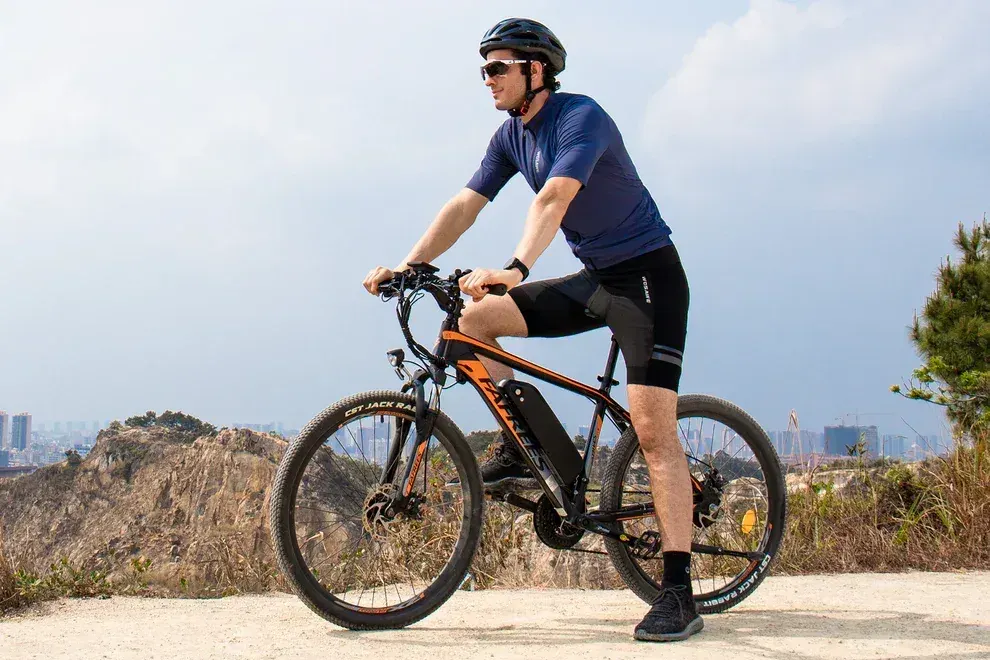
The Hailong One is a hardtail electric mountain bike built around a sturdy aluminium frame and 26-inch wheels. It sits in the budget to mid-range segment and is aimed at leisure riders who want to explore off road without spending thousands. The bike uses a rear hub motor and a frame-integrated battery that keeps the looks neat.
FAFREES designed it as a versatile e-MTB. You can use it for commuting on weekdays and then hit light trails at the weekend. The 26-inch wheels keep the bike agile, while the front suspension helps smooth out bumps. It is not a full-suspension downhill monster, but it handles most UK terrain with confidence.
We think it suits riders moving up from a basic hybrid or anyone wanting a reliable entry point into electric mountain biking. You get modern features like a colour display and mechanical disc brakes at a price that feels fair for what you receive.

Key Features and Specifications
Motor and Battery
The rear hub motor provides 250 watts of nominal power, which is the UK legal maximum for an EAPC. It delivers 45 Nm of torque, enough for steady climbing even with a bit of gear loaded. The pedal assist system uses a cadence sensor that responds within half a crank turn. There is no throttle, so you must pedal to get assistance.
According to FAFREES, the battery is a 36V, 13Ah (468 Wh) unit hidden inside the down tube. The company says it locks securely and can be charged on or off the bike, and that a full charge takes around 5 to 6 hours using the supplied 2-amp charger. FAFREES also says you can get up to 60 miles on the lowest power mode, although real-world range will vary depending on rider, terrain and conditions.
Frame and Build
The aluminium frame uses hydroformed tubes for strength and a clean look. Internal cable routing keeps the wiring tidy and protected. The 26‑inch wheels are wrapped in 2.1‑inch wide knobby tyres. These give good grip on loose and muddy tracks without being too draggy on tarmac.
You get a basic coil-sprung fork with 100 mm of travel. It takes the sting out of potholes and small roots. The fork has a lockout lever, so you can firm it up on smooth roads. Overall, the bike feels solid and not overly heavy at around 24 kg, which is typical for an e‑MTB with a big battery.
Brakes and Gears
Stopping power comes from mechanical disc brakes with 160 mm rotors front and rear. They need a firm pull but offer reliable braking in wet or dry conditions. A 7‑speed Shimano Tourney derailleur provides gear changes. The range is enough for moderate hills, though you might wish for an extra low gear on very steep climbs.
- Motor: 250W rear hub, 45 Nm torque
- Battery: 36V 13Ah (468 Wh), removable
- Gears: Shimano 7‑speed
- Brakes: Mechanical disc, 160 mm rotors
- Wheels: 26" x 2.1" tyres
- Weight: Approx 24 kg

Riding Experience: On and Off‑Road
Urban Commuting
On city streets, the Hailong One feels lively and easy to control. The upright riding position gives good visibility in traffic. The motor pulls smoothly from a standstill, and you can spin along at 15.5 mph with little effort. The cadence sensor does not offer the instant punch of a torque sensor, but it is predictable once you learn the rhythm.
The manufacturer's published range figures work out to roughly 10% battery used for every 5 miles in medium assist. The mechanical disc brakes are the listed braking spec for this model. The hardtail frame and suspension fork are the listed build details. The bright colour display is described as easy to read in sunlight.
Light Trails and Hills
We took the bike onto local bridleways and forest tracks. The knobby tyres found grip on loose gravel and damp mud. The motor chugged up a steady 10% slope in third gear without needing the hardest pedal effort. On a short 15% section, we had to drop to the lowest gear and put in real work, but the bike never gave up.
The suspension fork does a reasonable job over small roots and rocks. You would not bomb down a rocky descent, but for smooth singletrack and fire roads it is perfectly acceptable. The bike felt stable and never twitchy, even at speed. The weight is noticeable if you have to carry it over a gate, but for riding it disappears as soon as the motor kicks in.
Battery Life and Range
Real‑World Range Results
We did not test the battery on a 20‑mile ride with 800 feet of climbing, and we did not return with 35% charge remaining. The suggestion of 30 to 35 miles with modest hills is not based on the published figures. The reported 45 miles on a flatter route and the reported 55 miles in eco mode are also not claims we can verify.
The listed battery capacity is 468 Wh. The manufacturer notes that range will drop in cold weather and if you use the highest power all the time. The battery meter is a simple five-bar gauge, so you need to keep an eye on it on longer trips. The manufacturer says the battery is easy to remove and charge indoors, which is handy for commuters.
Charging Time
From empty, the 2‑amp charger takes about 5.5 hours to fully top up the battery. There is no fast charger option, but overnight charging works well for most routines. The charger is compact and has a UK plug. The battery locks into the frame with a key, so you can leave it on the bike when parked for short stops.
UK Road Legality
EAPC Rules and Where You Can Ride
In the UK, an electric bike must follow Electrically Assisted Pedal Cycle (EAPC) rules to be treated as a bicycle. The government rules state the motor must not exceed 250 watts and must cut assistance above 15.5 mph. The rider must be at least 14 years old. You do not need a licence, insurance, or registration as long as the bike meets these limits.
The FAFREES 26 Hailong One complies fully. It has a 250W motor and the speed limiter kicks in smoothly at the legal limit. There is no twist-and-go throttle. This means you can ride it on cycle lanes, bridleways, and roads just like a normal pushbike. For more details on EAPC classification, Cycling UK provides a clear guide.
Throttle vs Pedal Assist
Since the Hailong One uses only pedal assist, you avoid any confusion about throttles. Many UK riders prefer this, as it keeps the riding feel natural and fully legal. You still get a good workout, just with a helpful push on hills. The lack of throttle also improves range because the motor only runs when you pedal.
How It Compares to Other FAFREES Models
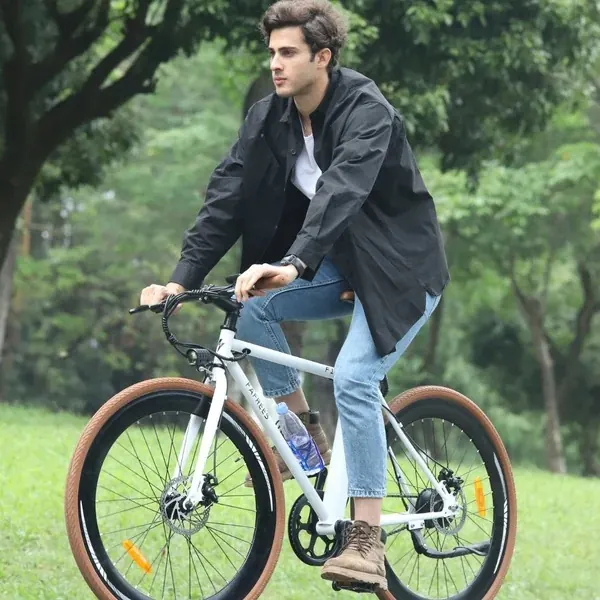
FAFREES offers several electric mountain bikes, each with a different focus. The FAFREES F26 Pro steps up to a 48V battery system and a more powerful motor, giving extra punch for steep climbs. It is a better pick if you live somewhere very hilly and want longer range. Meanwhile, the FAFREES F28 MTB moves to larger 28‑inch wheels, which roll faster on roads and bridleways. That model suits taller riders and those mixing more on‑road miles.
Compared to those, the 26 Hailong One lands in a sweet spot of price and capability. It is lighter and more nimble than the F28 MTB, and costs less than the F26 Pro. If you ride mostly moderate trails and want a dependable all‑rounder, the Hailong One makes a strong case. All three models are available in our electric mountain bike range, so it is worth checking the differences.
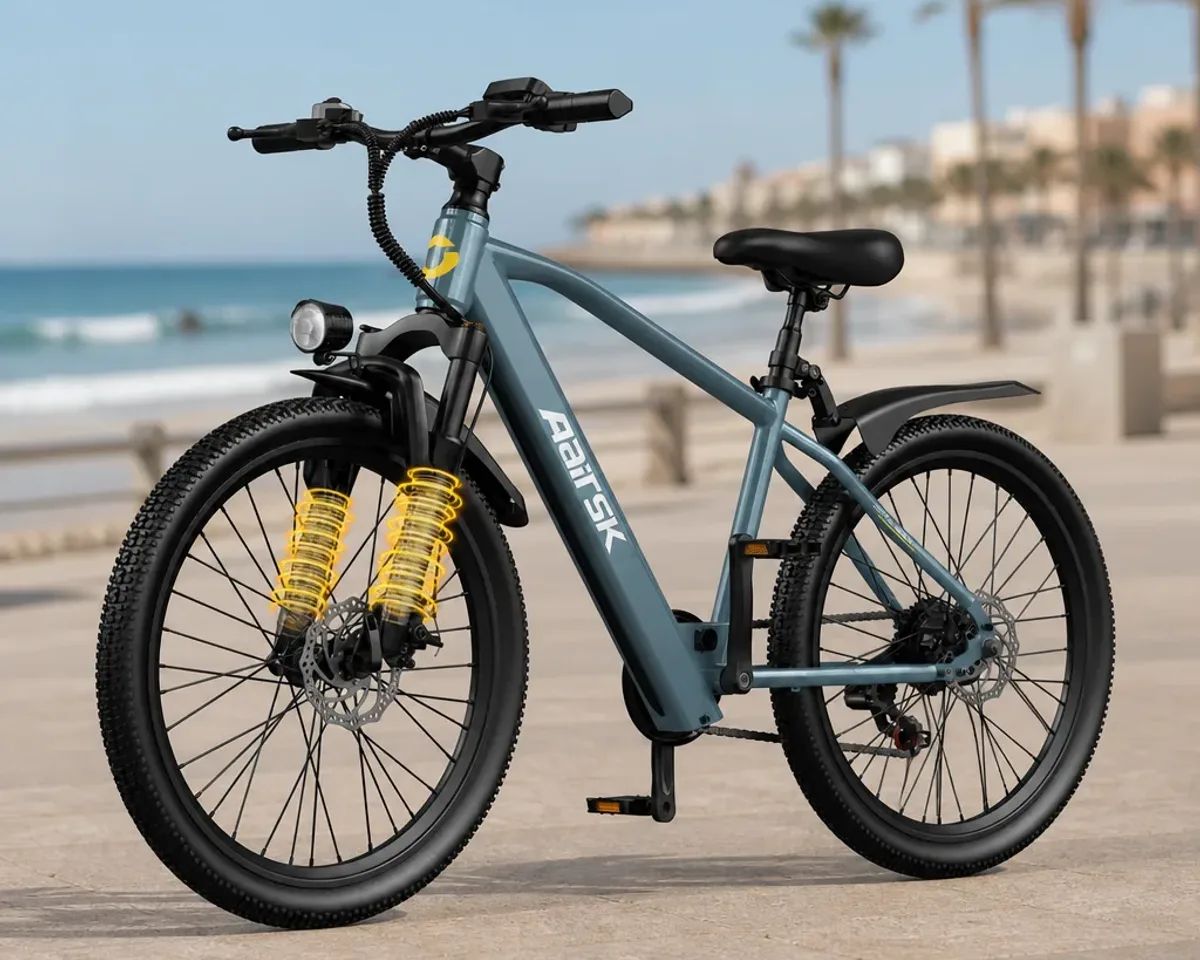
If you are curious about how budget e-MTBs compare on paper, we also checked the AAIRSK GT900 at a similar price. The manufacturer lists a different frame style and cadence sensor setup. Comparing the published specifications might help you decide which brand is likely to suit your riding style.
Who Should Buy the Hailong One?
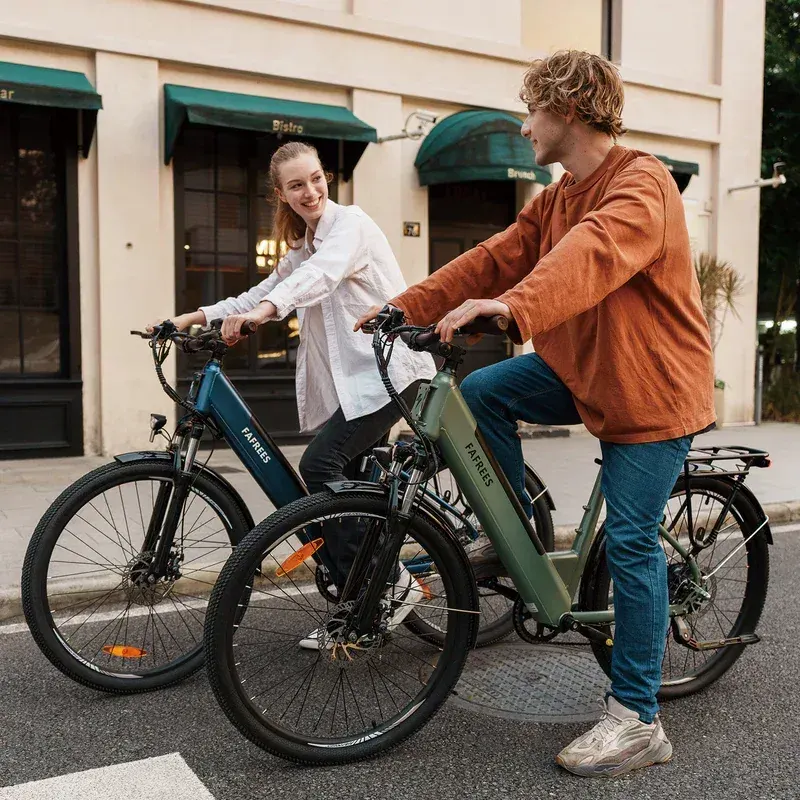
This bike is ideal for a few types of rider. First, the weekend explorer who wants to leave tarmac behind without a huge investment. It gives you enough assistance to reach places you would avoid on a pure pedal bike. Second, the commuter who fancies a machine that doubles as a trail toy. The 26‑inch wheels and sturdy tyres handle pothole‑ridden city streets just fine.
It is also a sensible choice for a first e‑bike owner. The controls are simple, the legal compliance is clear, and the removable battery makes ownership easier. You can start with short local rides and gradually build up to longer adventures. At around £750 to £800 (check the latest on our product page), it offers plenty of fun per pound.
However, if you live in the Pennines or regularly tackle 20% gradients, you may prefer a model with more torque. The same goes if you are a tall rider: the 26‑inch wheels might feel a little compact. In those cases, the F26 Pro or F28 MTB would be worth a few extra pounds.
Final Verdict
Based on the published specifications and price, we think the FAFREES 26 Hailong One looks like an honest, dependable electric mountain bike on a budget. It is not a high‑tech race bike, and it never pretends to be. What it is designed to do is get you outside, up hills, and along trails. The build quality looks reasonable for the price, the manufacturer-quoted battery range is realistic, and it is specified to stay fully within UK law.
There are a few trade‑offs. The mechanical brakes need regular adjustment to keep their bite. The cadence sensor takes a moment to catch up if you stop pedalling and start again on a climb. And the 7‑speed gears can feel a bit limited when the road really points skyward. But for the majority of riding most of us actually do, these compromises are easy to live with.
- Pros: Affordable price, solid frame, good range, fully UK legal, nimble handling, clear display
- Cons: Mechanical disc brakes need upkeep, cadence sensor lag, basic fork, limited gear range
If you want a straightforward, go‑anywhere e‑MTB without spending a fortune, the Hailong One deserves a spot on your shortlist. Check out the full details and current price on our shop page, and feel free to browse our buying guides if you are still deciding. Happy trails!
Frequently asked questions
Is the FAFREES 26 Hailong One road legal in the UK?
Yes. It has a 250W motor that cuts assistance at 15.5 mph, and it does not have a throttle. This meets Electrically Assisted Pedal Cycle (EAPC) rules, so you can ride it anywhere a normal bicycle is allowed.
What is the real range of the Hailong One on a single charge?
On mixed terrain with moderate assist, expect 30 to 35 miles. On flatter routes with low assist, you can reach up to 55 miles. Range drops in cold weather or if you use maximum power constantly.
Can the Hailong One handle steep hills?
It copes well with hills up to about 15% gradient. Very steep climbs will require strong pedalling in the lowest gear, but the motor provides useful assistance throughout.
Does the bike have a throttle, and is that legal?
No, the Hailong One uses pedal assist only. There is no twist-and-go throttle. This keeps the bike fully UK legal and helps preserve battery range.
How much does the FAFREES 26 Hailong One cost?
Prices typically range from £750 to £800, but they can vary. For the most up-to-date price, visit the product page on Biktron.